
Heart Failure EECP Treatment
A painless method that supports circulation from outside when your heart is tired, added to your medication. Goal: less shortness of breath, more movement.
- Non-surgical
- 35 Sessions
- Painless
In brief
In heart failure due to coronary artery blockage, it may strengthen the heart, reduce hospital admissions and increase exercise capacity.
It does not replace your medication; it complements it.
35 sessions: 5 days a week, 60 minutes per session.
The strongest evidence: improvement in exercise time and symptoms.
How Does Heart Failure Affect the Body?
Heart failure does not mean the heart has stopped. The heart works but cannot pump as much blood as the body needs; it is a slowly progressing, chronic condition. The most common causes are coronary artery disease, long-standing high blood pressure, diabetes and heart valve disease.
Weakening heart muscle
The heart muscle cannot pump blood strongly enough. Less blood reaches the organs and muscles.
Narrowed coronary arteries
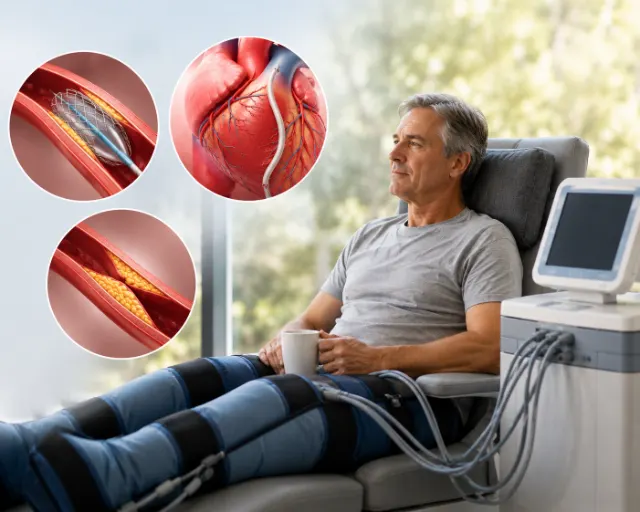
Narrowing in the vessels that feed the heart is the most common cause of heart failure.
Fluid buildup in the lungs
Blood that backs up leads to fluid in the lungs. Shortness of breath comes from here.
Hover over or tap the cards: the related area is highlighted in the illustration.
Kidneys and fluid balance
When too little blood reaches the kidneys, the body retains salt and water. Rapid weight gain may be seen.
Swelling in the legs and feet
The accumulated fluid causes edema in the ankles and legs. Shoes begin to feel tight.
Palpitations and rhythm disorder
Enlarged heart chambers set the stage for palpitations. An irregular heartbeat must always be evaluated.
What Changes in Circulation with EECP?
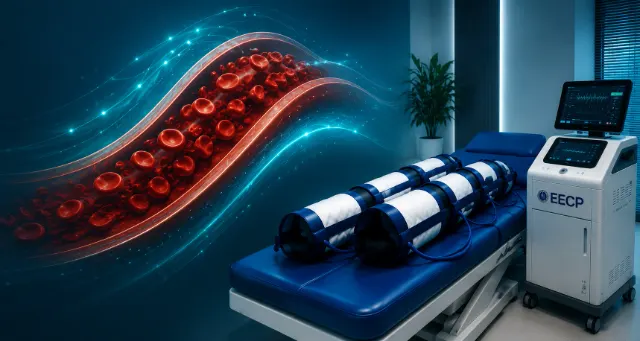
The diagram below shows simply the support EECP gives to circulation.
Narrowed vessel, reduced flow
- Less blood passes through the narrowed vessel
- Heart muscle and muscles are not nourished enough
- Shortness of breath and fatigue with little exertion
- Daily activities become increasingly limited
Supported circulation
- Blood returning to the heart increases while the heart relaxes
- The load the heart faces while pumping is reduced
- The aim is easier exertion in daily tasks
- Applied together with medication, without being admitted
Schematic illustration; EECP does not remove plaque from the vessel.
External Support with Every Heartbeat
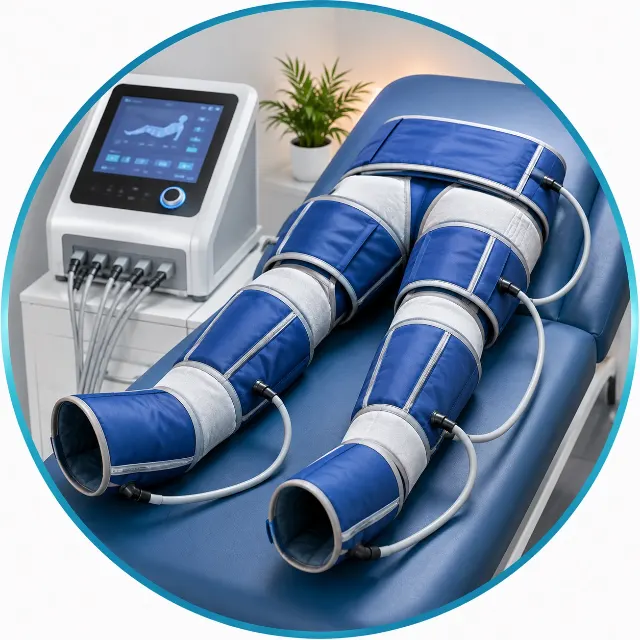
During treatment you lie down and rest. The device monitors your heart rhythm with an ECG and controls the cuffs accordingly.
Cuffs inflate
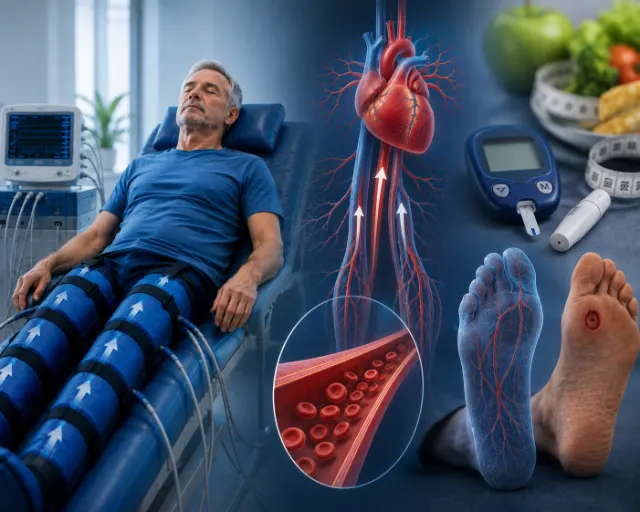
While the heart relaxes, the cuffs on the calves, thighs and buttocks inflate in sequence: first the calves, then the thighs and buttocks.
Blood is directed toward the heart
Blood in the legs is pushed toward the heart and the vessels that feed the heart. The heart muscle is nourished with more blood during this time.
The heart's workload is reduced
The pressure is released just before the heart contracts, so the heart can pump more easily. This cycle repeats with every heartbeat.
What does the patient gain?
As sessions progress, longer walking and less fatigue are targeted. Progress is evaluated at follow-up visits.
Possible Benefits of EECP in Heart Failure
Response varies from person to person. The following are aims and gains reported in studies.
Walking longer
Longer exercise time is the best-documented effect. In the randomized study this difference was significant.
Improvement in symptoms
The exertion level at which shortness of breath starts (NYHA class) may improve. Stairs and slopes may become easier to climb.
Less shortness of breath
The aim is for daily tasks to be done with less shortness of breath. Sleeping comfortably at night may also become easier.
Support for vascular health
Repeated sessions may support the function of the inner vessel lining. A healthy endothelium is important for vessels to be able to widen.
Ease in daily life
As movement becomes easier, daily tasks may become easier.
Without surgery, as an outpatient
Applied externally with cuffs; you return to daily life after the session. During the session you can rest and listen to music.
Who Is It Suitable For, and Who Not?
The decision is made individually by our cardiologist after an examination, ECG and echocardiography.
✓May be suitable
- Stable chronic heart failure with medication optimized
- Heart failure due to vessel blockage (ischemic)
- Those with limited exercise capacity despite treatment
- Heart failure accompanied by chest pain
- Those not suitable for surgery or a new procedure
✕Not suitable
- Worsened (decompensated) heart failure
- Severe aortic valve regurgitation
- Aortic aneurysm
- Active deep vein thrombosis, vein inflammation
- Uncontrolled high blood pressure
- Severe rhythm disorders
- Marked bleeding tendency and pregnancy
How Does the Treatment Process Work?
Blood pressure, pulse, weight and edema status are checked before every session. At the end of the course, results are reviewed with our cardiologist.
Questions About Heart Failure and EECP
Does EECP completely cure heart failure?
No. Heart failure is a chronic disease and EECP does not eliminate it. The aim is to increase exercise capacity and ease complaints in addition to medication.
Can I stop my heart medication?
No. During EECP you need to continue your medication as your cardiologist recommends. Only your doctor decides on medication changes.
My ejection fraction (EF) is low. Can I still have EECP?
A low EF alone is not a barrier; the PEECH study enrolled patients with an EF of 35% or below. What matters is that your condition is stable and that no unsuitable condition is present.
What happens if my shortness of breath increases during treatment?
Sessions are performed under the supervision of the healthcare team, and weight, edema and blood pressure are checked before every session. If shortness of breath worsens, treatment is stopped and our cardiologist re-evaluates.
When will I feel the effect and how long does it last?
In most patients the effect becomes noticeable in the second half of the course. The duration of the effect varies from person to person; in some patients a repeat course can be planned in later years.
I have a pacemaker or ICD. Is that a barrier to EECP?
A pacemaker or ICD alone is usually not a barrier. The type of device and your rhythm are examined separately in the preliminary evaluation, and the decision is made by our cardiologist.
Contact us for a free preliminary assessment
Let's evaluate together with our cardiology team whether EECP is suitable for your heart failure. The preliminary evaluation is free and does not commit you to any treatment.
- Non-surgical
- Painless
- Under medical supervision
- Nicosia, Cyprus