
Heart Attack Prevention and the Role of EECP
The most important way to prevent a heart attack is a healthy life for life. EECP does not replace this foundation. It is being studied as a non-surgical additional option that supports vascular health.
- Non-surgical
- 35 Sessions
- Painless
In brief
It is being studied as support for vascular health in healthy people and heart patients, with the aim of lowering the future risk of heart attack and heart failure.
The foundation of prevention is healthy eating, regular activity, quitting smoking and controlling risk factors.
EECP may improve the function of the inner vessel lining; this was shown in a meta-analysis of controlled studies.
That it prevents a heart attack has not been shown in the studies we reviewed. The evidence on this point is limited.
What Happens on the Way to a Heart Attack?
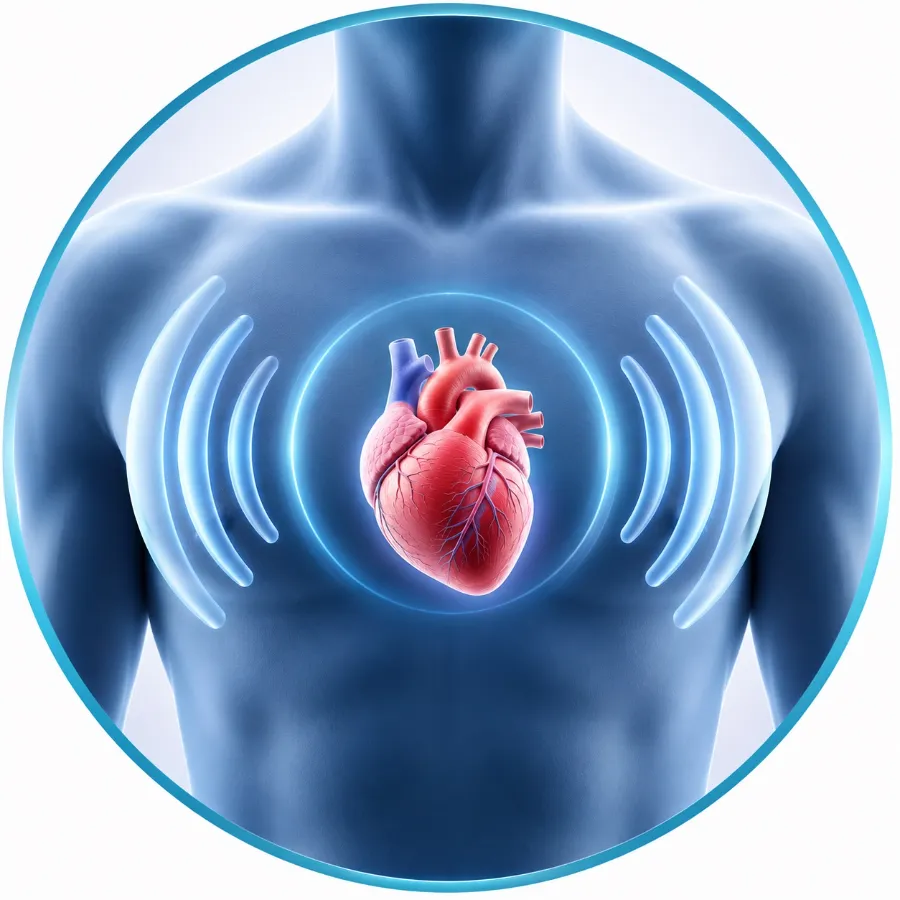
A heart attack is often the result of atherosclerosis that develops over years. Plaque built up in the vessel wall can rupture and a clot can form on it. If the clot blocks the vessel, the heart muscle is deprived of oxygen and is damaged.
Plaque in the coronary vessels
Fat and inflammatory cells build up in the walls of the vessels that feed the heart. This build-up is called plaque.
Heart muscle deprived of oxygen
If the plaque ruptures and the vessel becomes blocked, part of the heart muscle is left without blood. This is called a heart attack.
Inner vessel lining
The inner lining of the vessels regulates how the vessel widens and narrows. Impairment of this function is an early sign of atherosclerosis.
Hover over or tap the cards: the related area is highlighted in the illustration.
Blood sugar
High blood sugar damages the vessel wall. Diabetes is one of the main factors that raise the risk of a heart attack.
Activity
Regular activity protects the heart and vessels. Guidelines recommend at least 150 minutes of moderate exercise a week.
Risk factors work together
Blood pressure, cholesterol, sugar, weight and smoking are considered together. Risk is not calculated from a single value.
Vascular Health: Before and With EECP
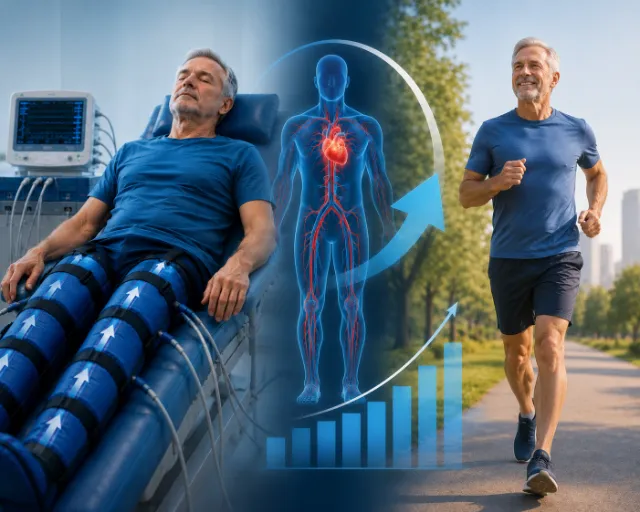
The comparison below simply illustrates the vascular support EECP aims to provide. This support does not replace the treatment of risk factors.
A vessel at risk
- Function of the inner vessel lining is weakened
- Blood sugar or blood pressure control is inadequate
- Sedentary lifestyle
Supported vessel function
- Blood flow stimulates the inner vessel lining
- Improvement of the vessel widening response is the aim
- Risk factor follow-up continues alongside the sessions
Schematic illustration. EECP does not remove plaque from the vessel.
How Does EECP Support the Vessels?
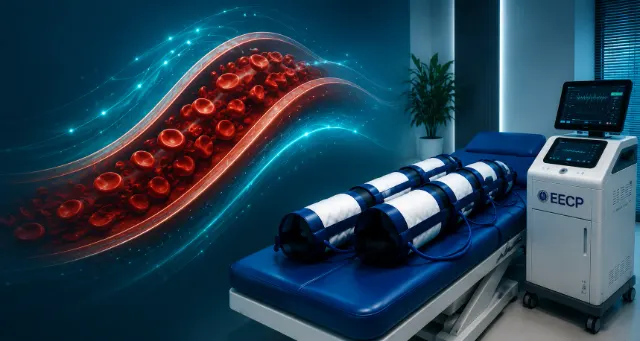
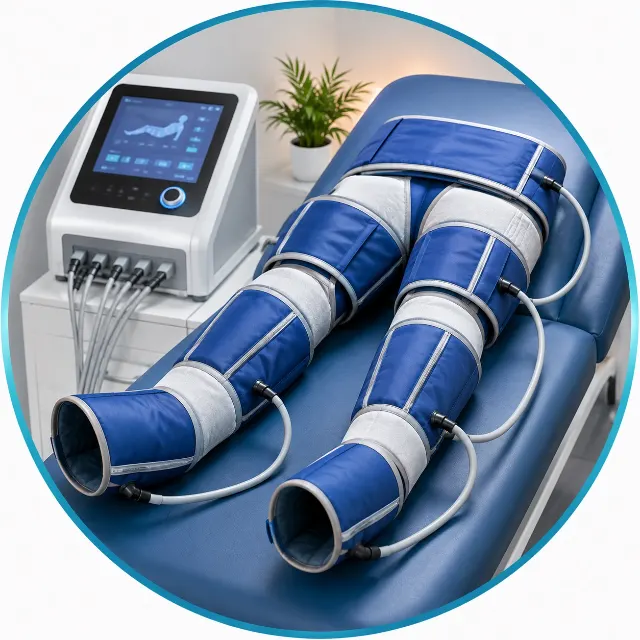
During treatment you lie down and rest. The device monitors your heart rhythm with an ECG and controls the cuffs accordingly.
Cuffs inflate
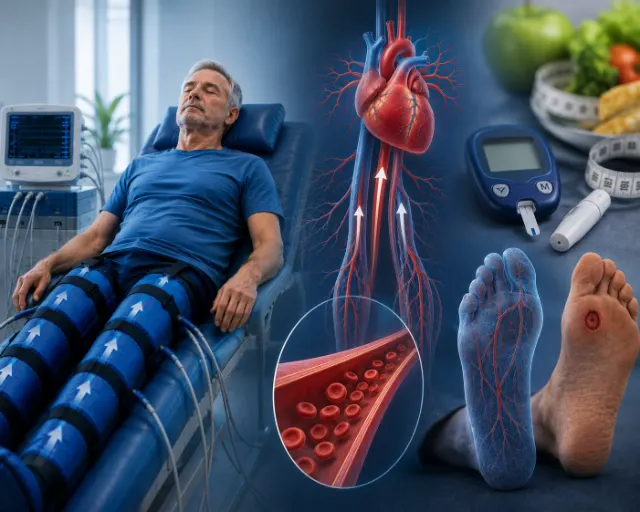
While the heart relaxes, the cuffs on the calves, thighs and buttocks inflate in sequence: first the calves, then the thighs and buttocks.
Blood flow speeds up
Blood in the legs is pushed toward the heart and flow in the vessels increases. The increased flow stimulates the inner vessel lining.
The heart's workload is reduced
The pressure is released just before the heart contracts, so the heart can pump more easily. This cycle repeats with every heartbeat.
Follow-up continues
Blood pressure and pulse are measured throughout the course. Your risk factors are reviewed together with our cardiologist.
What Has Been Reported in Studies?
Response varies from person to person. The following are aims and gains reported in studies.
Inner vessel lining function
In a meta-analysis of 19 controlled studies, the vessel widening response improved after 3–7 weeks of EECP.
People with impaired glucose tolerance
In this group, flow in the arm vessels improved after EECP; improvement in sugar control was also seen.
Inflammation markers
A decrease in inflammation markers in the blood was reported in the same research group.
In patients who have had a heart attack
In a retrospective study, those who received EECP had less recurrent chest pain and fewer repeat vessel-opening procedures.
Regular measurement
Blood pressure and pulse are measured at every session throughout the course.
Part of a prevention plan
EECP is considered together with nutrition, exercise and medication.
Who Is It Suitable For, and Who Not?
Your heart attack risk is assessed first. Blood pressure, cholesterol, sugar and family history are considered together. The decision on EECP is made individually by our cardiologist.
✓May be suitable
- Patients who have had a heart attack, completed treatment and are under cardiologist follow-up
- People with diabetes or impaired glucose tolerance
- Adults with several risk factors who want to support vascular health
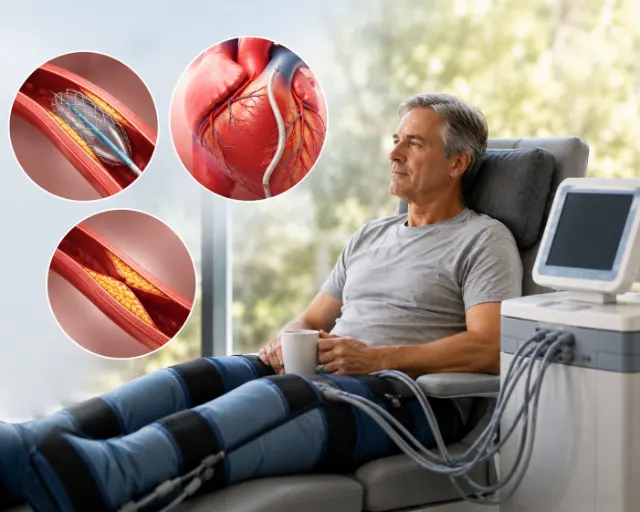
- Patients after a stent or bypass who want to support vascular health with their cardiologist's approval
✕Not suitable
- People whose chest pain is new or has increased and has not yet been assessed
- Severe aortic valve regurgitation
- Aortic aneurysm
- Active deep vein thrombosis, vein inflammation
- Uncontrolled high blood pressure
- Severe rhythm disorders
- Marked bleeding tendency and pregnancy
How Does the Treatment Process Work?
Blood pressure and pulse are checked before every session. At the end of the course, results are reviewed together with our cardiologist. For prevention-related enquiries, tests and risk calculation are reviewed before treatment.
Common Questions About Heart Attack Prevention and EECP
Does EECP prevent a heart attack?
This has not been shown in the studies we reviewed. In a retrospective study of 798 patients who had had a heart attack, the rate of repeat heart attacks was not found to differ among those who received EECP.
I'm healthy. Should I have EECP?
In healthy people the foundation of prevention is a healthy lifestyle and control of risk factors. For those who ask about EECP, a risk assessment is done first; the decision is made together with our cardiologist.
Who is it considered for more often?
It may be discussed as support for vascular health in people with diabetes, impaired glucose tolerance or a history of heart attack. Medication and lifestyle changes continue in these people too.
Will I keep taking my medication?
Yes. You should continue your medication as recommended by your cardiologist. Any change to medication is decided only by your doctor.
Does EECP replace exercise?
No. Guidelines recommend at least 150 minutes of moderate exercise a week. EECP is considered alongside this recommendation, not instead of it.
How many sessions are needed?
The standard course is 35 sessions: 5 days a week, 60 minutes per session. You return to daily life straight after a session. When the course ends, follow-up of your risk factors continues with your cardiologist.
You May Also Be Interested In

Contact us for a free preliminary assessment
Let's talk together about your heart attack risk and the role EECP may play for you. Our cardiologist will review your tests, medication and medical history. If EECP is not suitable for you, we will say so clearly.
- Non-surgical
- Painless
- Under medical supervision
- Nicosia, Cyprus