
In Stroke Recovery EECP Support
Recovery after a stroke caused by a blocked brain vessel can take months. EECP is a non-surgical circulatory support that may be added to physiotherapy and medication. Studies are promising, but the evidence is still limited.
- Non-surgical
- 35 Sessions
- Painless
In brief
It may support the recovery process after a stroke caused by a blocked brain vessel and ease the return to daily life.
It does not replace physiotherapy or medication; it is applied in addition to them.
It has been studied only in strokes caused by vessel blockage. Brain haemorrhage is not the subject of this page.
Evidence is limited: studies are promising, but most are small and use different methods.
What Happens When a Brain Vessel Is Blocked?
When a vessel supplying the brain is blocked, nerve cells in that area are deprived of oxygen. Around the damage there may be tissue with reduced but not yet lost blood flow. Recovery also continues as the brain's remaining areas take over functions.
Damaged area
Nerve cells are damaged in the area fed by the blocked vessel. Symptoms vary according to the function of that area.
Collateral circulation
Collateral circulation from neighbouring vessels can feed tissue around the damage. The strength of collateral circulation varies from person to person.
Neck vessels
Most of the blood going to the brain passes through the carotid arteries in the neck. Narrowing in these vessels is one of the causes of stroke.
Hover over or tap the cards: the related area is highlighted in the illustration.
Heart
The heart pumps blood to the brain. In some strokes, a clot forms in the heart and travels to the brain.
Arm and leg strength
A stroke often causes loss of strength on one half of the body. Physiotherapy aims to regain this strength.
Daily life
Tasks such as dressing, walking and eating are the most important measures of recovery. They are tracked with special scales and compared with the situation before treatment.
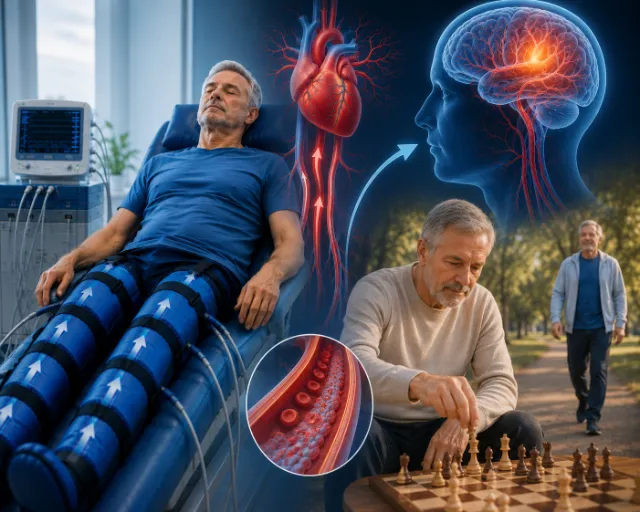
After a Stroke: Before and With EECP
The comparison below simply illustrates the circulatory support EECP aims to provide. The effect varies from person to person; your progress is followed with neurological examination and daily-living scales.
After a stroke
- Blood flow to one area of the brain is reduced
- Loss of strength in an arm or leg
- Help needed with daily tasks
Circulatory support in addition to rehabilitation
- The aim is higher flow velocity in the brain vessels
- Physiotherapy and medication continue
- Progress is followed with scales
Schematic illustration. EECP does not open a blocked vessel; it does not replace clot-dissolving treatment or intravascular procedures.
How Does EECP Support Brain Circulation?
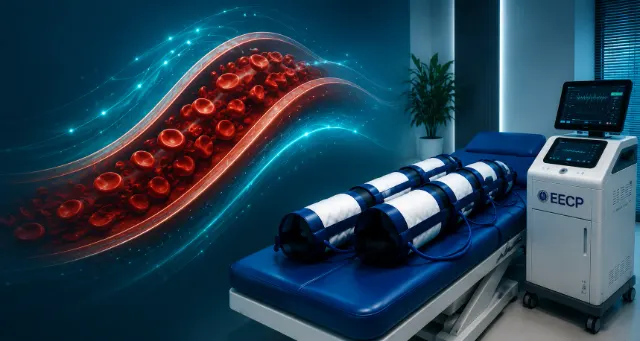
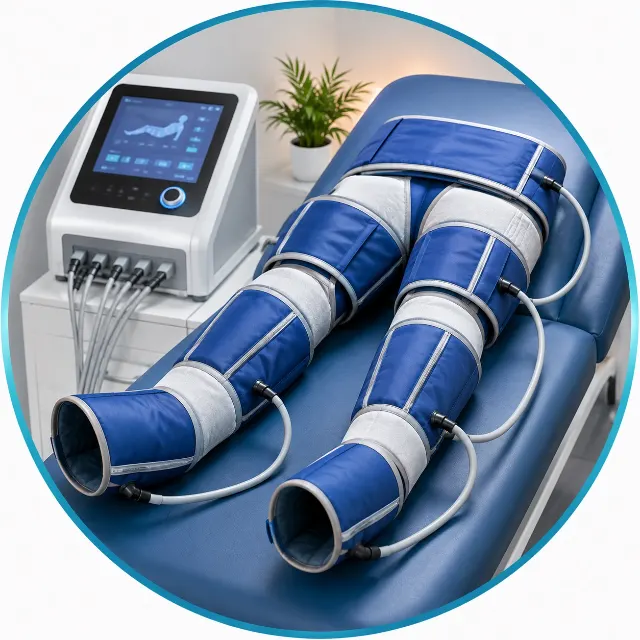
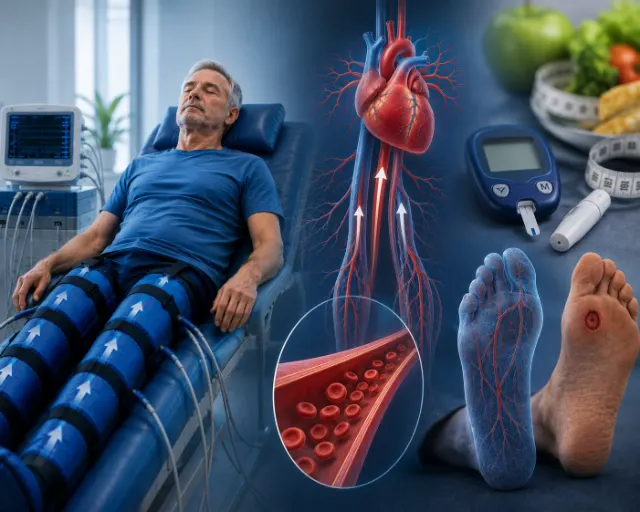
During treatment you lie down and rest. The device monitors your heart rhythm with an ECG and controls the cuffs accordingly.
Cuffs inflate
While the heart relaxes, the cuffs on the calves, thighs and buttocks inflate in sequence: first the calves, then the thighs and buttocks.
Blood is directed toward the brain
The pressure that rises while the heart relaxes increases flow in the vessels going to the brain. This effect was measured with Doppler in studies.
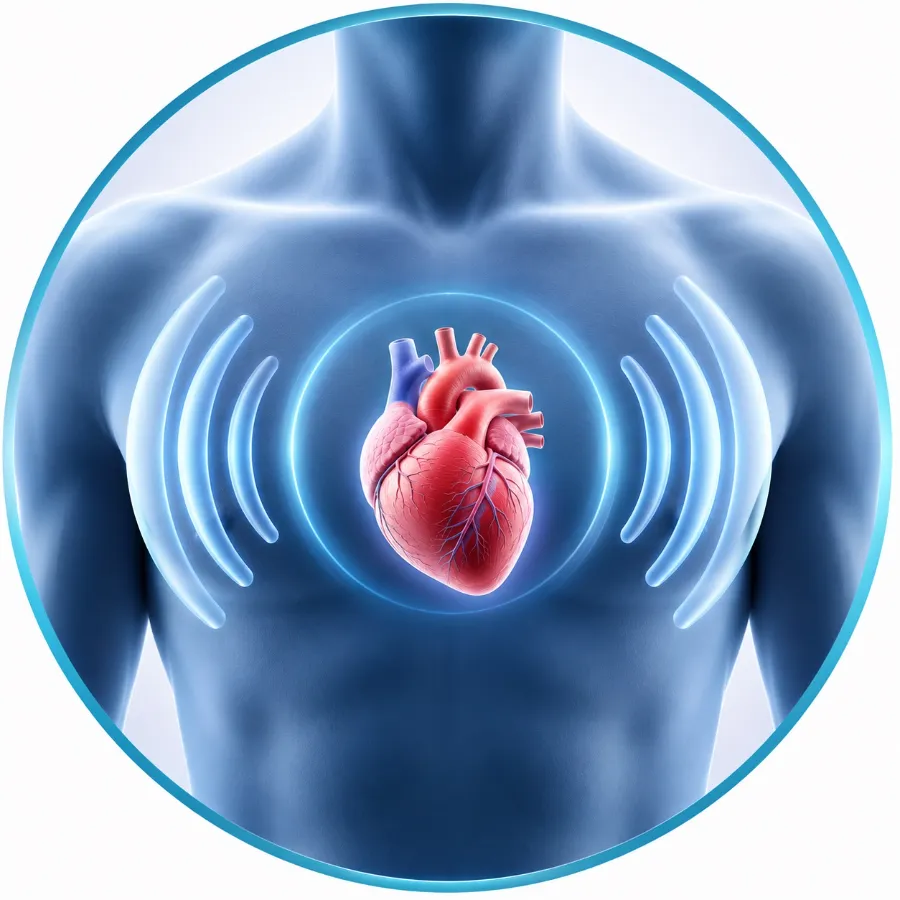
The heart's workload is reduced
The pressure is released just before the heart contracts, so the heart can pump more easily. This cycle repeats with every heartbeat.
Recovery is followed
Throughout the course, neurological examination and daily-living scales are tracked. Your physiotherapy programme continues unchanged.
What Has Been Reported After Stroke?
Response varies from person to person. The following are aims and gains reported in studies.
Daily living skills
In a meta-analysis of 10 studies, the activities of daily living score improved significantly with EECP.
Degree of dependence
In seven studies, improvement was seen on the scale showing the degree of dependence caused by stroke.
Neurological examination
In a randomized study of 171 patients, neurological scores at day 90 were better in the EECP group.
Brain blood flow
In a single-session measurement, flow velocity in the brain vessels rose by about 9–10 percent on both sides.
Together with rehabilitation
In the studies, EECP was given in addition to the standard medication and rehabilitation programme.
Safety
According to the meta-analysis, EECP was generally applied safely in stroke patients.
Who Is It Suitable For, and Who Not?
The type and timing of the stroke and vessel imaging are assessed together. The decision is made jointly with your neurologist and our cardiologist. Blood pressure needs to be under control.
✓May be suitable
- Patients with a stable condition after a stroke caused by a blocked brain vessel
- Patients continuing physiotherapy who want circulatory support
- Patients with narrowing found in brain vessels who are under neurology follow-up
- Patients with blood pressure under control who have difficulty walking or with daily tasks after a stroke
✕Not suitable
- Stroke caused by brain haemorrhage
- Aneurysm in a brain vessel
- Severe aortic valve regurgitation
- Aortic aneurysm
- Active deep vein thrombosis, vein inflammation
- Uncontrolled high blood pressure
- Severe rhythm disorders
- Marked bleeding tendency and pregnancy
How Does the Treatment Process Work?
Blood pressure and pulse are checked before every session. At the end of the course, results are reviewed together with our cardiologist. For post-stroke patients, sessions are planned around physiotherapy hours.
Common Questions About EECP After Stroke
Does EECP speed up recovery after a stroke?
In some studies, daily-living and neurological scores were found to be better with EECP. However, the studies were small and used different methods; for this reason the evidence is limited.
How long after a stroke can it be started?
Studies examined both the first weeks and the later recovery period. The start time is determined with your neurologist according to the type of stroke, your blood pressure and general condition.
Do I need to stop physiotherapy?
No. In the studies, EECP was given in addition to standard rehabilitation. Your physiotherapy programme continues unchanged; session times are planned accordingly.
I had a brain haemorrhage. Can I have EECP?
The studies on this page examined only strokes caused by vessel blockage. The situation after a brain haemorrhage must be assessed separately and carefully with your neurologist.
Will I keep taking my medication?
Yes. You should continue your medication as recommended by your cardiologist. Any change to medication is decided only by your doctor.
Does it have side effects?
The side effects most often reported are skin irritation and muscle discomfort in the cuff area; they usually resolve on their own. In older and frail patients, pressure is adjusted individually.
You May Also Be Interested In


Contact us for a free preliminary assessment
Let's assess together whether EECP may be suitable during your recovery after a stroke. All you need to do is bring your imaging results, neurology reports and medication list. The decision is made in agreement with your neurologist.
- Non-surgical
- Painless
- Under medical supervision
- Nicosia, Cyprus