
Hypertension and EECP Current Evidence on
EECP does not replace standard hypertension treatment. Current research is examining its possible complementary effects on blood pressure and vascular function in patients selected after a physician's assessment.
- Non-surgical
- Under medical supervision
- Complementary approach
In brief
EECP has been studied in suitable patients as an addition to, not a replacement for, the standard approach of medication, nutrition, activity and regular follow-up.
The 2025 meta-analysis evaluated 37 studies and 1,504 patients; 11 studies were included in the quantitative analysis.
A 2026 comparative study examined 120 older patients with isolated systolic hypertension and wide pulse pressure.
In uncontrolled or severe hypertension, a physician's assessment before EECP is mandatory.
Effects on Blood Pressure and Vessels
Blood pressure is the pressure that the blood pumped by the heart exerts on the vessel wall. Repeated measurements using the right technique and clinical assessment matter more than a single reading.
Systolic pressure
The upper value, measured while the heart contracts. Especially at older ages, systolic pressure can become prominent as vessel stiffness increases.
Diastolic pressure
The lower value, measured while the heart relaxes. Systolic and diastolic values are assessed together.
Isolated systolic hypertension
A pattern in which systolic pressure is high while diastolic pressure is relatively normal; it is more common in older adults.
Wide pulse pressure
An increase in the difference between systolic and diastolic values. It can be linked to vessel stiffness and cardiovascular risk.
Endothelium, Vessel Stiffness and Vascular Resistance
Long-standing high blood pressure can affect the inner lining and wall of the vessels. This process may reduce the vessels' ability to widen and increase peripheral vascular resistance.
Endothelial function
The endothelium lines the inner surface of vessels and helps regulate vessel tone. Hypertension, diabetes and smoking can impair endothelial function.
Nitric oxide (NO)
Nitric oxide is an important signalling molecule that helps vessels relax. Reduced NO bioavailability can limit the vessel widening response.
Vessel stiffness
When the vessel wall loses its elasticity, systolic and pulse pressure can rise.
Peripheral resistance
The degree of narrowing in the small arteries determines the resistance the heart meets while pumping blood into the circulation.
Diastolic Flow and Repeated Shear Stress
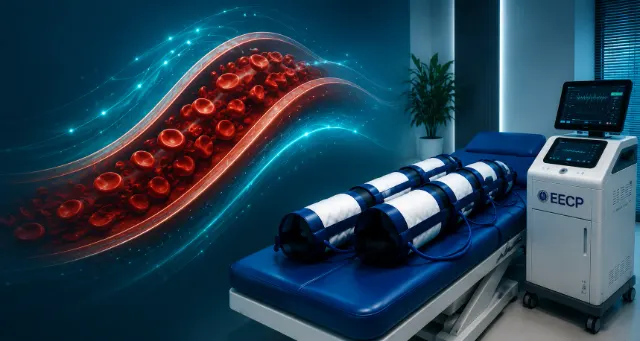
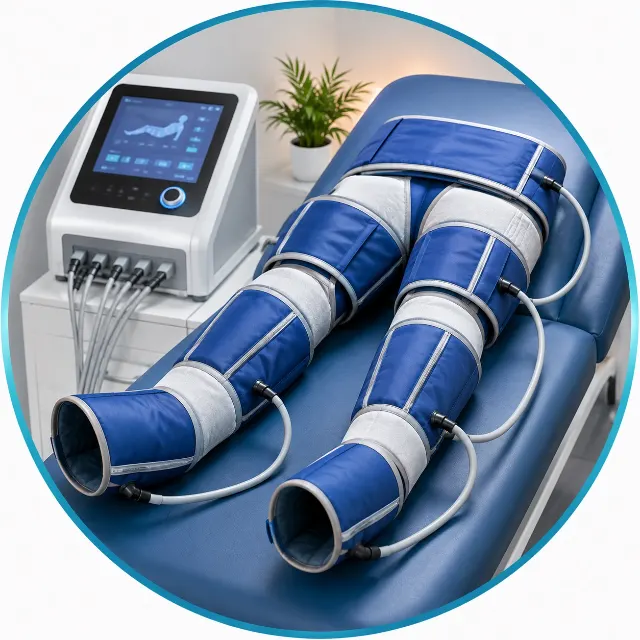
During EECP the leg and buttock cuffs inflate in sequence during the heart's relaxation phase and deflate quickly just before contraction. This cycle is synchronized with the heartbeat via the ECG.
Diastolic flow support
Sequential cuff pressure helps direct blood toward the heart and upper body while the heart relaxes.
Shear stress stimulus
Repeated changes in blood flow create a mechanical stimulus on the inner vessel lining. Studies investigate how this stimulus relates to the endothelial response.
Vascular response
Changes in indicators such as NO, endothelin-1, FMD and systemic vascular resistance are measured in EECP research.
Individual assessment
The expected response may vary depending on the type of disease, accompanying conditions, medication and vessel structure.
Findings From 37 Studies and 1,504 Patients
The study by Biswas and colleagues in Cardiology in Review evaluated 37 investigations; 11 studies were included in the meta-analysis.
Systolic blood pressure
The mean change in the meta-analysis was reported as −7.85 mmHg (95% confidence interval: −9.59 to −6.11).
Diastolic blood pressure
The mean change was reported as −3.94 mmHg (95% confidence interval: −5.56 to −2.33).
How should it be interpreted?
The findings support investigating EECP as a supportive approach; they do not show that it replaces standard medication.
Limitations
The authors emphasized that larger samples, standard protocols and long-term outcomes require further research.
Source: Biswas R et al. 2025. PMID: 40310148. DOI: 10.1097/CRD.0000000000000933.
Isolated Systolic Hypertension and Wide Pulse Pressure
The retrospective comparative study by Ding and colleagues analysed 120 older patients. Amlodipine alone was compared with amlodipine plus EECP.
Indicators found lower
At the end of the study the combined group had lower systolic blood pressure, pulse pressure, mean arterial pressure, systemic vascular resistance and endothelin-1.
Indicators found higher
Nitric oxide, flow-mediated dilation (FMD), wall shear stress and coronary flow reserve (CFR) were higher.
Study design
This study is not a randomized controlled trial; it is a retrospective comparative study that reviewed past records.
Clinical meaning
The results provide a rationale for further research, particularly in older patients with isolated systolic hypertension and wide pulse pressure.
Source: Ding M et al. Pak J Pharm Sci. 2026;39(7):2153–2164. PMID: 42170980. DOI: 10.36721/PJPS.2026.39.7.203.1.
Does EECP Replace Medication?
No. Hypertension medication is adjusted only by the physician who follows the patient. If EECP is being considered, it is assessed together with the current treatment, measurements and accompanying conditions.
✓Groups studied
- Adults with hypertension
- Older patients with isolated systolic hypertension
- Selected patients with wide pulse pressure
- Those assessed for an additional approach while standard treatment continues
✕Need detailed assessment first
- Uncontrolled or severe hypertension
- Severe aortic valve regurgitation or aortic aneurysm
- Active deep vein thrombosis
- Severe rhythm disorders
- Marked bleeding tendency or pregnancy
Questions About Hypertension and EECP
Does EECP cure hypertension?
No. Current studies investigate possible changes in blood pressure and vascular function. EECP does not replace standard hypertension treatment.
Can I stop my blood pressure medication?
No. Medication can be changed only by the decision of the physician who follows you. During EECP too, your current treatment plan continues under physician supervision.
What is isolated systolic hypertension?
It is a type of hypertension in which the systolic value is high and the diastolic value relatively normal, and it is more common especially at older ages.
What does wide pulse pressure mean?
It is an increase in the difference between systolic and diastolic pressure; it may be linked to vessel stiffness and should be assessed in clinical context.
Is EECP used in uncontrolled high blood pressure?
In uncontrolled or severe hypertension, blood pressure and general condition must first be assessed by a physician; EECP may not be suitable.
Do scientific studies give definitive results?
Although the 2025 meta-analysis and the 2026 comparative study report promising findings, larger, standard-protocol and long-term studies are needed.

EECP assessment for hypertension
Your blood pressure measurements, the medication you take and accompanying conditions are reviewed together to determine whether EECP is suitable for you.