
Preventing Alzheimer's and Parkinson's and Vascular Health
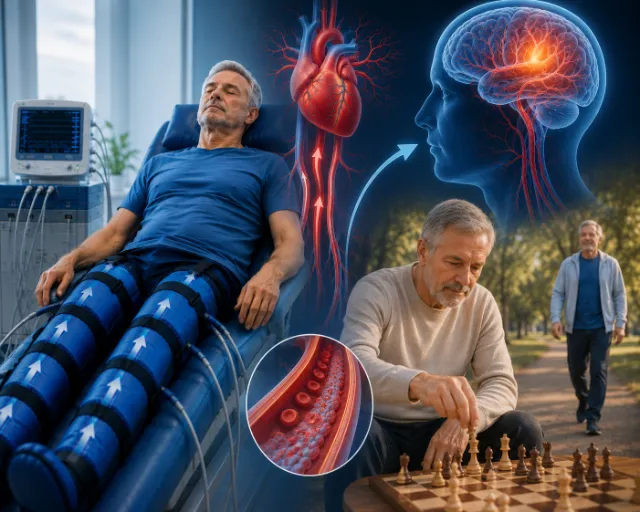
Cardiovascular risk factors are closely linked to memory problems and dementia. Most of these factors can be modified. EECP is a method that supports vascular health; it has not been shown to prevent these diseases.
- Non-surgical
- 35 Sessions
- Painless
In brief
It may help lower, in healthy people, the future risk of Alzheimer's and Parkinson's disease linked to blocked brain vessels.
The seven measures of brain health: not smoking, regular activity, healthy eating, normal weight, blood pressure, cholesterol and blood sugar.
EECP may improve the function of the inner vessel lining; this was shown in a meta-analysis of controlled studies.
We have not read a study showing that EECP lowers the risk of Alzheimer's or Parkinson's in healthy people.
How Does Vascular Health Affect the Brain?
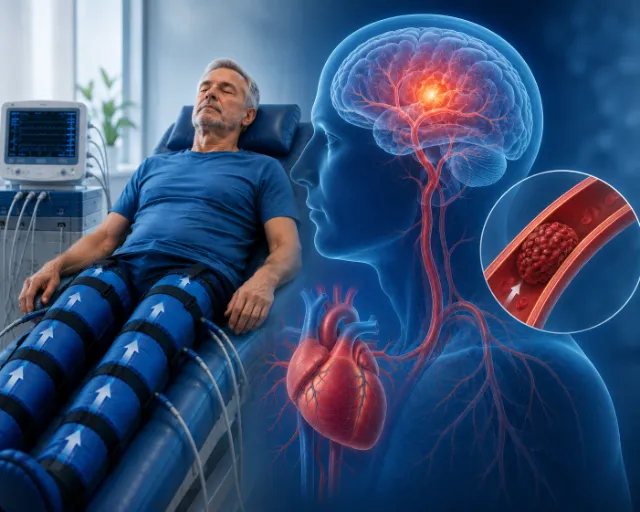
The brain needs a steady and regular blood flow. Over the years, blood pressure, sugar and cholesterol can wear down the brain's vessels. The American Heart Association emphasizes that cardiovascular risks are closely linked to cognitive decline and dementia.
Memory and thinking
Memory, attention and decision-making depend on different areas of the brain working together. Keeping these areas healthy depends on regular and sufficient blood flow.
Small vessels
The small vessels that feed the deep areas of the brain are easily affected by blood pressure. Damage can progress for years without symptoms.
Neck vessels
Plaque can build up in the carotid arteries that carry blood to the brain. These vessels can be examined easily and painlessly with ultrasound.
Hover over or tap the cards: the related area is highlighted in the illustration.
Blood pressure
One of the ideal brain health measures is blood pressure below 120/80 mmHg without medication. High blood pressure is one of the main factors that wear down the brain's vessels.
Sugar and cholesterol
The ideal measures include fasting blood sugar below 100 mg/dL and total cholesterol below 200 mg/dL.
Activity
Regular physical activity is one of the seven measures of brain health. Inactivity is regarded as a risk factor for both the heart and the brain.
Brain Vessels: Before and With EECP
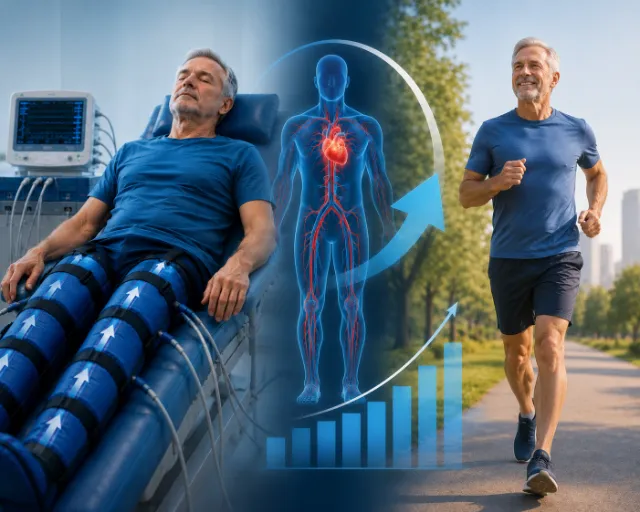
The comparison below simply illustrates the vascular support EECP aims to provide. This support does not replace treatment of risk factors; your medication and lifestyle recommendations continue unchanged.
Vessels at risk
- High blood pressure, sugar or cholesterol
- Function of the inner vessel lining is weakened
- Sedentary lifestyle
Supported vessel function
- Flow stimulating the inner vessel lining
- Regular follow-up of risk measures at every session
- Lifestyle and medication recommendations continue unchanged
Schematic illustration. It has not been proven that EECP prevents Alzheimer's or Parkinson's.
How Does EECP Support the Vessels?
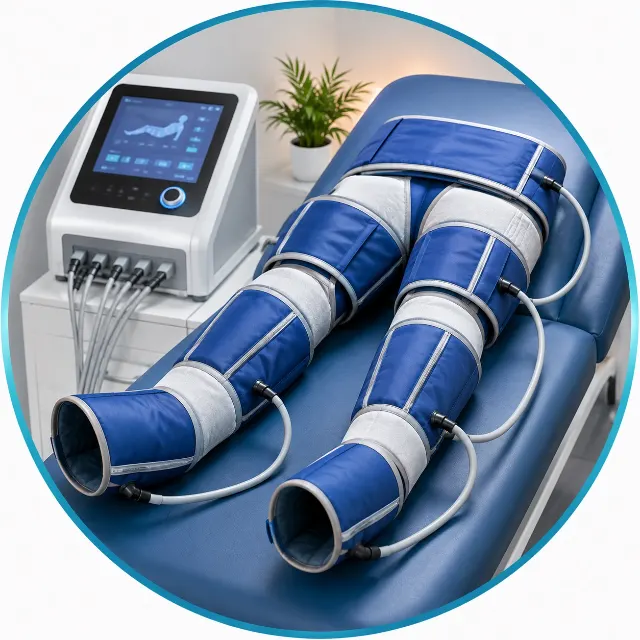
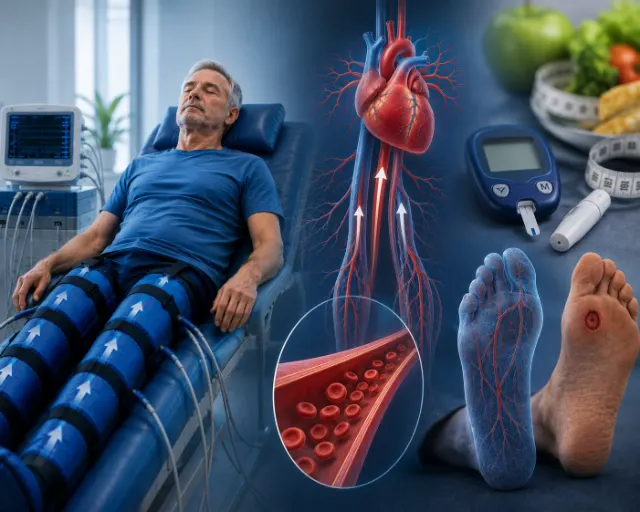
During treatment you lie down and rest. The device monitors your heart rhythm with an ECG and controls the cuffs accordingly.
Cuffs inflate
While the heart relaxes, the cuffs on the calves, thighs and buttocks inflate in sequence: first the calves, then the thighs and buttocks.
Flow in the vessels increases
Cuff pressure speeds up flow in the vessels. The increased flow stimulates the inner vessel lining.
The heart's workload is reduced
The pressure is released just before the heart contracts, so the heart can pump more easily. This cycle repeats with every heartbeat.
Risk measures are monitored
Your blood pressure, sugar and cholesterol values are followed throughout the course. If needed, you are referred to neurology.
What Is Known About Brain Health?
Response varies from person to person. The following are aims and gains reported in studies.
Seven measures
According to the American Heart Association, ideal brain health rests on four behaviours and three health values.
Blood pressure
Blood pressure below 120/80 mmHg without medication is one of the ideal brain health measures.
Inner vessel lining
In a meta-analysis of 19 controlled studies, the vessel widening response improved after EECP.
Non-surgical and painless
It is applied externally with cuffs; you lie down and rest throughout the session.
Medical supervision
Blood pressure and pulse are measured at every session throughout the course.
Straight back to daily life
After the session you can return to your daily tasks straight away.
Who Is It Suitable For, and Who Not?
Your cardiovascular risk measures are assessed first. Any family history of Alzheimer's or Parkinson's is also discussed. The decision on EECP is made individually by our cardiologist after unsuitable conditions are excluded.
✓May be suitable
- Adults with several cardiovascular risk factors
- People with small vessel changes found on brain MRI who have no symptoms yet
- People whose blood pressure, sugar and cholesterol are under treatment and who want to support vascular health
- People with a family history of dementia who want to follow their cardiovascular risks closely
✕Not suitable
- Aneurysm in a brain vessel
- Severe aortic valve regurgitation
- Aortic aneurysm
- Active deep vein thrombosis, vein inflammation
- Uncontrolled high blood pressure
- Severe rhythm disorders
- Marked bleeding tendency and pregnancy
How Does the Treatment Process Work?
Blood pressure and pulse are checked before every session. At the end of the course, results are reviewed together with our cardiologist. For prevention-related enquiries, your recent tests are reviewed before treatment.
Common Questions About Preventing Alzheimer's and Parkinson's
Does EECP prevent Alzheimer's or Parkinson's?
We have not read a study showing this. The recommended path for prevention today is control of cardiovascular risk factors and a healthy lifestyle.
Alzheimer's runs in my family. What should I do?
Family history cannot be changed, but blood pressure, sugar, cholesterol, weight, activity and smoking can. Following these measures regularly with your doctor is a good start. If you notice forgetfulness, do not delay seeing a neurologist.
Can a healthy person have EECP?
Yes, if there is no unsuitable condition. However, in healthy volunteers flow to the brain did not increase during EECP; expectations are discussed openly in light of this.
Which values should I follow?
Ideal measures: blood pressure below 120/80 mmHg without medication, total cholesterol below 200 mg/dL and fasting blood sugar below 100 mg/dL. Not smoking, regular activity, healthy eating and normal weight are also among the measures.
How many sessions are needed?
The standard course is 35 sessions: 5 days a week, 60 minutes per session. You return to daily life straight after a session. When the course ends, follow-up of your risk measures continues with your doctor.
How does this page differ from the treatment page?
This page covers prevention in people who do not yet have the disease. Studies in diagnosed patients and their results are covered separately on our Alzheimer's and Parkinson's treatment page.
You May Also Be Interested In



Contact us for a free preliminary assessment
Let's review your risk measures together to protect your brain health. Our cardiologist will assess your tests and openly discuss the role EECP may play for you. If it is not suitable, we will say so too.
- Non-surgical
- Painless
- Under medical supervision
- Nicosia, Cyprus