
Cardiac Longevity Protecting Your Heart for Many Years
Cardiac longevity is an approach that aims to keep the heart and vessels healthy into old age. Its foundation is a healthy lifestyle and control of risk factors. EECP may support vascular function; it has not been shown to extend life.
- Non-surgical
- 35 Sessions
- Painless
In brief
Supports a longer, healthier life by protecting the health of the heart and vessels.
According to guidelines, the most important way to protect heart health is a lifelong healthy lifestyle and control of risk factors.
EECP may improve the function of the inner lining of vessels; it was reported not to change arterial stiffness.
We have not read a study showing that EECP extends life in healthy people.
How Do the Heart and Vessels Change Over the Years?
With age, vessels stiffen and the function of the inner lining may weaken. Blood pressure, cholesterol, sugar and smoking speed up this process. Most of these factors can be changed and kept under control with regular follow-up.
Heart muscle
The heart works without stopping for a lifetime. High blood pressure increases the heart's workload over the years and can thicken the heart muscle.
Coronary arteries
Plaque can build up silently in the vessels that feed the heart. It can be detected through risk calculation before it causes symptoms.
Inner vessel lining
The inner lining regulates the widening and narrowing of the vessel. Weakening of this function is an early sign of vascular ageing and can be measured.
Hover over or tap the cards: the related area is highlighted in the illustration.
Fitness
How well the heart and lungs work together determines exertion capacity. Regular exercise preserves this capacity and makes daily tasks easier.
Activity
Guidelines recommend at least 150 minutes of moderate or 75 minutes of vigorous exercise per week.
Risk assessment
Calculating the 10-year cardiovascular risk is recommended in adults aged 40–75. Treatment decisions are made together by patient and physician based on this calculation.
Vascular Health: Before and With EECP
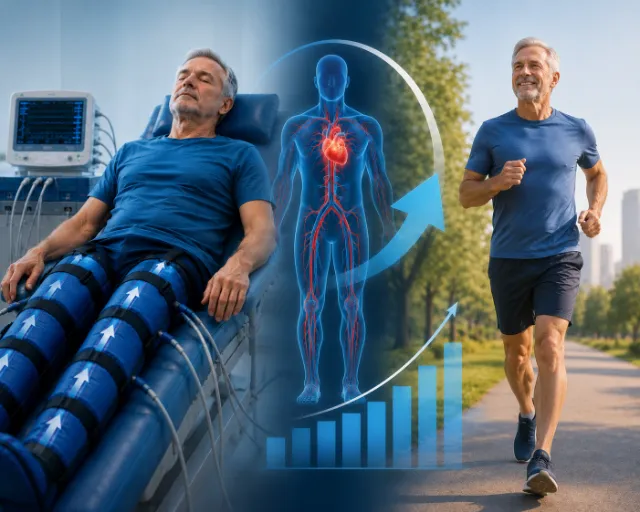
The comparison below shows in simple form the vascular support targeted with EECP. This support does not replace a healthy lifestyle; nutrition, exercise and medication recommendations continue as before.
Ageing vessels
- Function of the inner vessel lining is weakened
- Accumulated risk factors
- Sedentary lifestyle
Supported vessel function
- Flow stimulating the inner vessel lining
- Regular monitoring of risk factors
- Nutrition and exercise recommendations continue
Schematic illustration. EECP is not a method that reverses vascular ageing.
How Does EECP Support the Vessels?
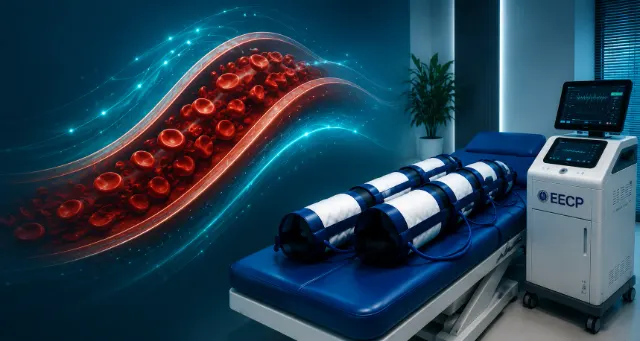
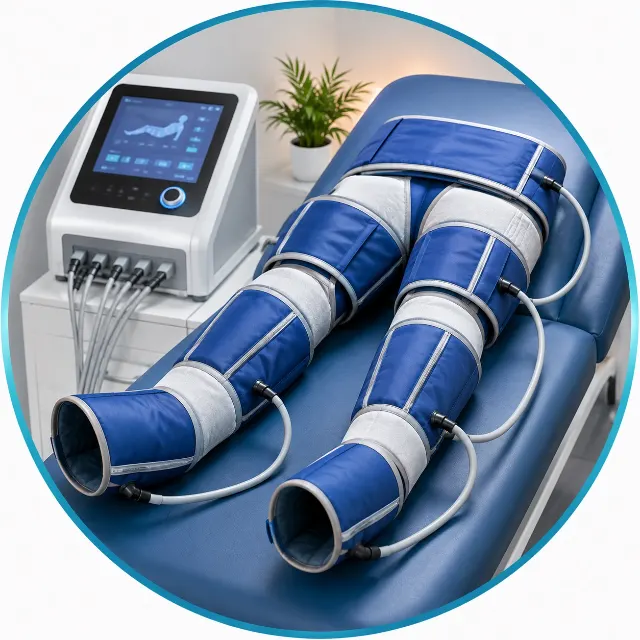
During treatment you lie down and rest. The device monitors your heart rhythm with an ECG and controls the cuffs accordingly.
Cuffs inflate
While the heart relaxes, the cuffs on the calves, thighs and buttocks inflate in sequence: first the calves, then the thighs and buttocks.
Flow in the vessels increases
Cuff pressure speeds up flow in the vessels. The increased flow stimulates the inner lining of the vessels in a way similar to exercise.
The heart's workload is reduced
The pressure is released just before the heart contracts, so the heart can pump more easily. This cycle repeats with every heartbeat.
Follow-up continues
Blood pressure, pulse and, if needed, vascular measurements are compared before and after the course.
What Is Known?
Response varies from person to person. The following are aims and gains reported in studies.
Healthy lifestyle
The guideline stresses that a lifelong healthy lifestyle is the most important way to prevent cardiovascular disease.
Exercise
The guideline recommends at least 150 minutes of moderate physical activity per week.
Inner vessel lining
In a meta-analysis of 19 controlled studies, the vessel widening response improved after EECP.
Non-surgical and painless
It is applied externally with cuffs; you lie down and rest throughout the session.
Long-term course
In a small 5-year follow-up of heart patients, 64 percent of those who received EECP did not have a serious cardiac event.
Straight back to daily life
After the session you can return to your daily tasks straight away.
Who Is It Suitable For, and Who Not?
First, your cardiovascular risk is calculated; blood pressure, cholesterol, sugar and lifestyle are evaluated together. The decision on EECP is made individually by our cardiologist.
✓May be suitable
- Adults with multiple risk factors who wish to support vascular health
- People with heart disease whose treatment is complete and who are under cardiologist follow-up
- People seeking additional support alongside regular exercise who have been evaluated from a cardiac standpoint
- People with a family history of early heart disease who want to monitor their risks closely
✕Not suitable
- Severe aortic valve regurgitation
- Aortic aneurysm
- Active deep vein thrombosis, vein inflammation
- Uncontrolled high blood pressure
- Severe rhythm disorders
- Marked bleeding tendency and pregnancy
How Does the Treatment Process Work?
Blood pressure and pulse are checked before every session. At the end of the course, results are reviewed with our cardiologist. For preventive visits, your current test results are reviewed before treatment.
Frequently Asked Questions About Cardiac Longevity and EECP
Does EECP extend life?
We have not read a study showing this. A small 5-year follow-up in heart patients is promising, but it had no control group and did not include healthy people.
What is the most important step for cardiac longevity?
According to guidelines, a lifelong healthy lifestyle: balanced nutrition, regular movement, quitting smoking and control of risk factors. Regular risk calculation after age 40 is also recommended.
Does EECP reduce arterial stiffness?
In a study of patients with angina, arterial stiffness measurements did not change. A meta-analysis of controlled studies, however, showed improvement in the function of the inner vessel lining.
I'm healthy. Can I have EECP?
If there is no unsuitable condition, you can. However, because the long-term benefit in healthy people is unknown, expectations are discussed openly. Healthy lifestyle recommendations take priority in every case.
Will I keep taking my medication?
Yes. You should continue your medication as recommended by your cardiologist. Any change to medication is decided only by your doctor.
How many sessions are needed?
The standard course is 35 sessions: 5 days a week, 60 minutes per session. You return to daily life immediately after a session. After the course, your risk follow-up continues with your doctor.
You May Also Be Interested In


Contact us for a free preliminary assessment
To protect your heart health for many years, let's work out your risk profile together. Our cardiologist reviews your test results and openly discusses where EECP fits for you. If it isn't suitable, we'll say so.
- Non-surgical
- Painless
- Under medical supervision
- Nicosia, Cyprus