
In Anxiety and Depression EECP Support
Anxiety and depression often occur together with heart and vascular complaints. EECP is not a psychiatric treatment. Its effect on anxiety and depression scores has been studied in some patient groups; results are mixed.
- Non-surgical
- 35 Sessions
- Painless
In brief
May lower anxiety and depression levels and improve mood and quality of life.
Treatment of anxiety and depression continues according to your psychiatrist's and psychologist's plan. EECP does not replace it.
In a study of 100 patients with rhythm disorders, anxiety and depression scores fell more in the EECP group.
In a sham-controlled study, however, there was no difference between groups in the anxiety score. The evidence is mixed.
How Do Anxiety and Depression Affect the Body?
Anxiety and depression affect not only mood but also the body. Palpitations, a feeling of breathlessness and sleep problems are common. Because these symptoms can be confused with heart complaints, heart and mental health are evaluated together.
Mood
Constant worry, restlessness, loss of motivation and inability to enjoy things can occur. A mental health specialist determines the diagnosis and treatment plan.
Palpitations
During anxiety, the heart may speed up and feel as if it is beating strongly. This symptom should also be evaluated from a cardiac standpoint.
Rhythm disorder
Anxiety and depression can also occur in patients with rhythm disorders. That is why rhythm and mood are addressed together.
Hover over or tap the cards: the related area is highlighted in the illustration.
Feeling short of breath
During anxiety you may feel you cannot get enough air. For this complaint, heart and lung causes are ruled out first.
Muscle tension
Prolonged anxiety can cause muscle tension and fatigue. This in turn makes daily life and concentration at work harder.
Sleep and quality of life
Anxiety and depression can disturb sleep. Sleep problems can in turn negatively affect mood and daytime energy over time.
Anxiety and Body: Before and With EECP
The comparison below shows in simple form the support targeted with EECP. The effect varies from person to person; your mood is monitored with scales.
Anxiety and depression burden
- Restlessness and lack of motivation
- Palpitations and sleep problems
- Reduced quality of life
Support alongside treatment
- Regular sessions, resting while lying down
- Follow-up with anxiety and depression scales
- Psychiatric treatment continues unchanged
Schematic illustration. EECP is not a treatment for anxiety or depression.
How Is EECP Applied?
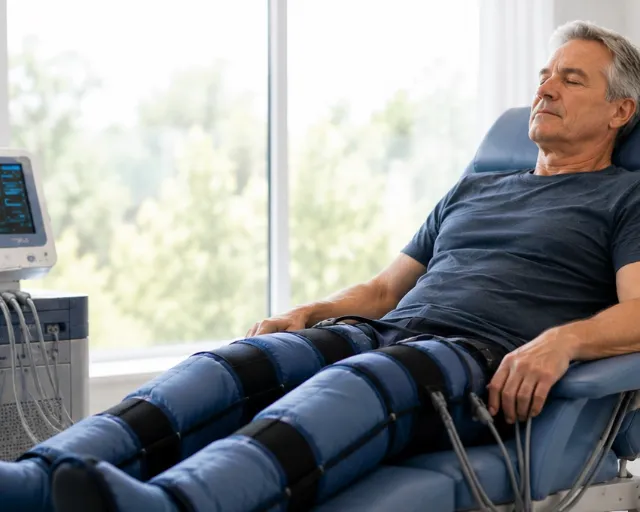
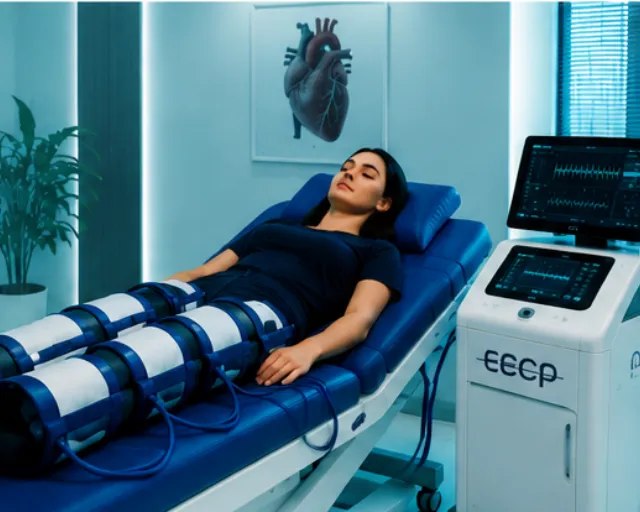
During treatment you lie down and rest. The device monitors your heart rhythm with an ECG and controls the cuffs accordingly.
Cuffs inflate
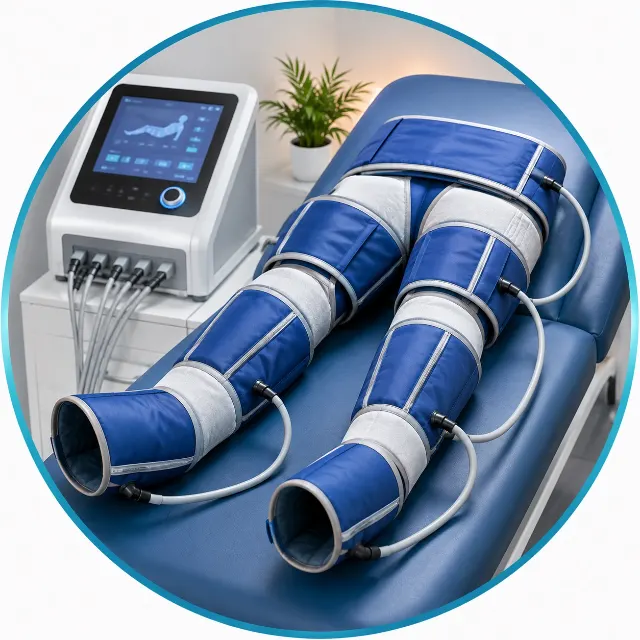
While the heart relaxes, the cuffs on the calves, thighs and buttocks inflate in sequence: first the calves, then the thighs and buttocks.
Blood is directed toward the heart
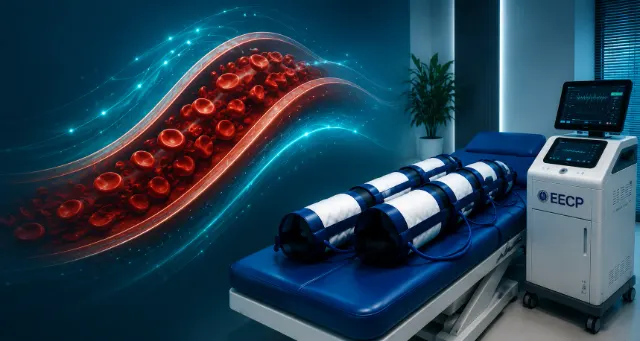
Cuff pressure pushes blood toward the heart and increases flow in the vessels. You lie back and rest throughout the session.
The heart's workload is reduced
The pressure is released just before the heart contracts, so the heart can pump more easily. This cycle repeats with every heartbeat.
Mood is monitored
Anxiety and depression scales can be compared before and after the course. Results are shared with your mental health specialist.
What Has Been Reported in Studies?
Response varies from person to person. The following are aims and gains reported in studies.
In people with rhythm disorders
In a randomized study of 100 patients, anxiety and depression scores fell more in the EECP group than in the control group.
Heart measurements
In the same study, blood pressure and cardiac ultrasound values were also better in the EECP group.
Sleep quality
In patients with chronic insomnia, the sleep quality score improved more with EECP than with sham treatment.
Mental quality of life
In the same study, the mental component of quality of life was better in the EECP group.
Expert recommendation
Experts in China recommend EECP for people with ischemic disease who experience anxiety or depression.
Non-surgical and medication-free
It is applied externally with cuffs; you lie down and rest throughout the session.
Who Is It Suitable For, and Who Not?
First, your heart and vascular status is evaluated. Anxiety and depression complaints are addressed together with your mental health specialist. For patients with rhythm disorders, the decision on EECP rests with our cardiologist.
✓May be suitable
- Patients with heart or vascular disease who have anxiety and depression complaints
- Patients with episodic rhythm disorders whom their cardiologist considers suitable
- People with insomnia and anxiety complaints who have been evaluated from a cardiac standpoint
- Patients seeking support in addition to heart medication, whose psychiatric treatment is ongoing and who are suitable from a cardiac standpoint
✕Not suitable
- Severe depression or thoughts of self-harm: urgent psychiatric support is needed first
- Severe aortic valve regurgitation
- Aortic aneurysm
- Active deep vein thrombosis, vein inflammation
- Uncontrolled high blood pressure
- Severe rhythm disorders
- Marked bleeding tendency and pregnancy
How Does the Treatment Process Work?
Blood pressure and pulse are checked before every session. At the end of the course, results are reviewed together with our cardiologist. In patients with mood complaints, short scales can be used before and after the course.
Frequently Asked Questions About Anxiety, Depression and EECP
Does EECP reduce anxiety?
In a study of patients with rhythm disorders, anxiety scores fell more. In another sham-controlled study, however, there was no difference between groups.
Should I stop my antidepressants?
No. Your treatment continues according to your psychiatrist's plan. EECP does not replace medication or psychotherapy; only your doctor decides on medication changes.
How does this page differ from the depression page for vascular patients?
That page covers depression accompanying heart disease. This page focuses on anxiety and on studies in other patient groups, such as rhythm disorders and insomnia.
Are my palpitations from anxiety or from the heart?
To tell the difference, a cardiac evaluation and, if needed, a rhythm recording are done first. If a rhythm disorder is found, your cardiologist plans its treatment.
How many sessions are needed?
The standard course is 35 sessions: 5 days a week, 60 minutes per session. In the rhythm disorder study the program lasted 4 weeks; in the insomnia study it was 35 sessions.
I feel very low. What should I do?
If you have thoughts of harming yourself, do not wait: contact a health professional or your nearest emergency department. In this situation, getting support immediately comes first.
You May Also Be Interested In

Contact us for a free preliminary assessment
Let's talk through your anxiety, palpitation or mood complaints together. Our cardiologist evaluates your heart and tells you openly whether EECP is suitable for you. If needed, we make a joint plan with your mental health specialist.
- Non-surgical
- Painless
- Under medical supervision
- Nicosia, Cyprus