
Depression in Heart Patients and EECP Support
Depression is common in heart and vascular patients and can negatively affect recovery. EECP is not a treatment for depression. Changes in mood have been studied during EECP given for heart disease.
- Non-surgical
- 35 Sessions
- Painless
In brief
It may be a supportive addition alongside treatment of depression in vascular patients and may be accompanied by mood changes.
Treatment of depression continues according to your psychiatrist's plan. EECP does not replace medication and psychotherapy.
In patients with angina, depression and anxiety scores were reported to improve after EECP; the studies are uncontrolled.
Evidence is limited. If you have thoughts of harming yourself, contact a health professional immediately.
How Are Heart Disease and Depression Connected?
The American Heart Association reports that depression after a heart attack is consistently linked to worse outcomes. Chest pain, fatigue and limited movement can affect mood. For this reason, mood should be asked about regularly in heart patients.
Mood
Depression can show itself as lack of motivation, inability to enjoy things, and changes in sleep and appetite. The diagnosis is made by a physician.
Heart disease
Chest pain and fear of a heart attack can limit daily life. This limitation also affects mood.
Stress and pulse
In moments of anxiety and stress the pulse can speed up. These symptoms can be confused with heart complaints.
Hover over or tap the cards: the related area is highlighted in the illustration.
Vascular health
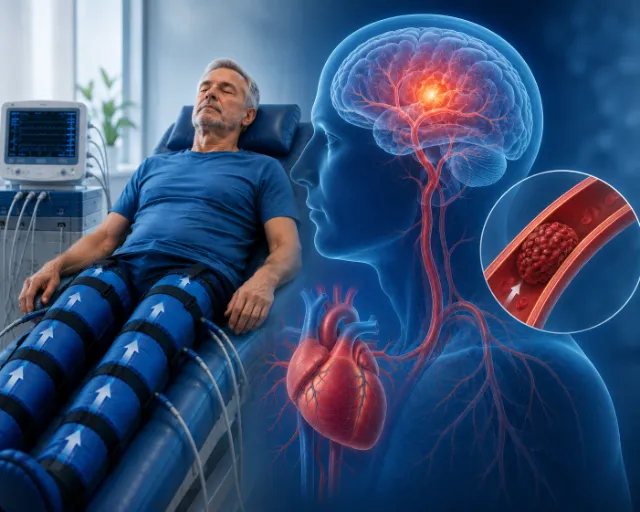
Vascular disease affects the whole body. Its treatment concerns both heart and brain health.
Activity
Chest pain and fatigue can reduce movement. Inactivity can in turn affect mood over time, and a vicious circle can form.
Daily life
Sleep, work and social life are parts of mental health. Recovery is followed not only by heart measurements but also in these areas.
Heart and Mood: Before and With EECP
The comparison below simply illustrates the changes aimed for with EECP given for heart disease. The effect varies from person to person; your mood is reviewed together with you throughout the course.
Heart complaints and mood
- Chest pain and fatigue
- Limits on movement and social life
- Lack of motivation and anxiety
Support accompanying heart treatment
- Supporting circulation to the heart is the aim
- Mood is followed with scales
- Psychiatric treatment continues unchanged
Schematic illustration. EECP is not a treatment for depression; it does not replace psychiatric treatment.
How Is EECP Applied?
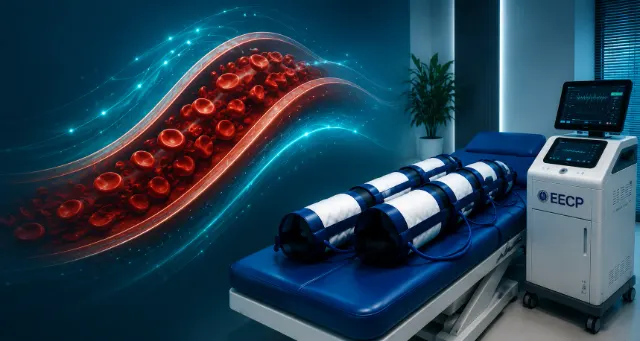
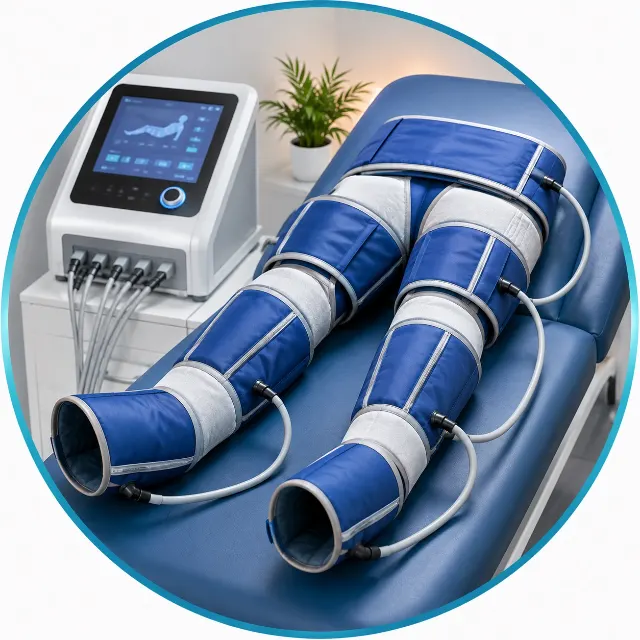
During treatment you lie down and rest. The device monitors your heart rhythm with an ECG and controls the cuffs accordingly.
Cuffs inflate
While the heart relaxes, the cuffs on the calves, thighs and buttocks inflate in sequence: first the calves, then the thighs and buttocks.
Blood is directed toward the heart
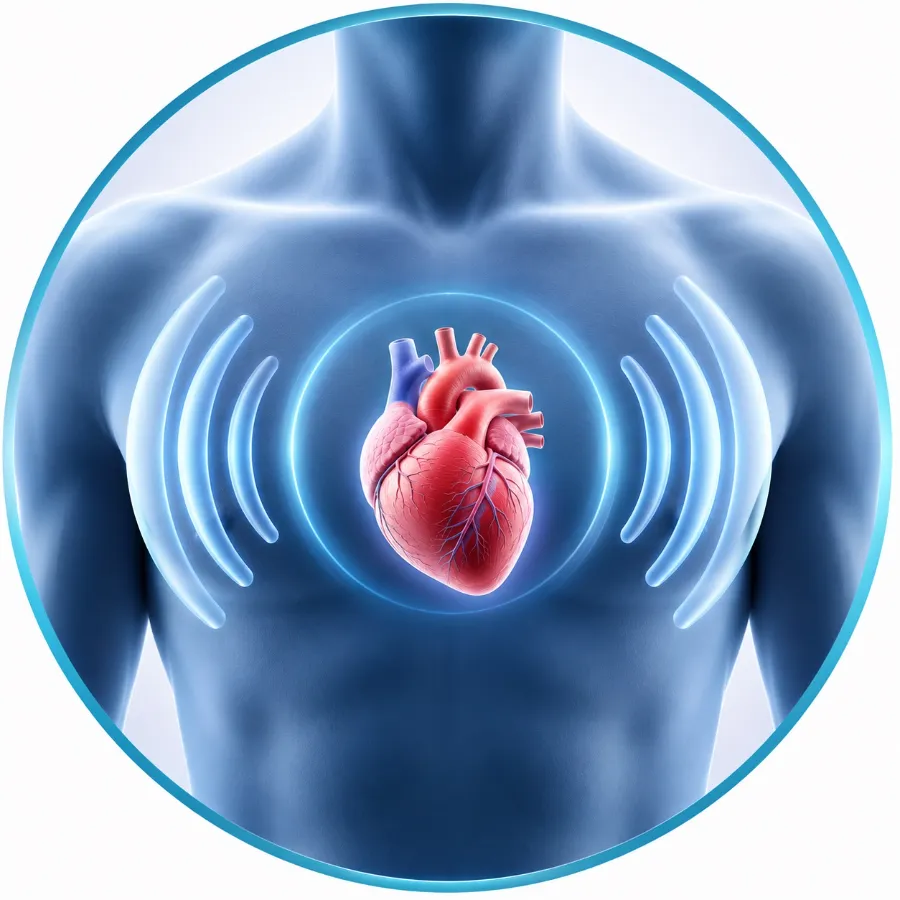
Cuff pressure pushes blood toward the heart and coronary vessels. Nourishment of the heart muscle is supported.
The heart's workload is reduced
The pressure is released just before the heart contracts, so the heart can pump more easily. This cycle repeats with every heartbeat.
Mood is monitored
Mood scales can be compared before and after the course. The assessment is shared with your psychiatrist.
What Has Been Reported in Studies?
Response varies from person to person. The following are aims and gains reported in studies.
Mood
In patients with angina, depression scores improved significantly after EECP.
Anxiety and physical complaints
In the same study, anxiety and physical complaints also decreased.
Perception of health
Patients' general perception of health and quality of life improved.
Link with ischaemia
The improvement was more marked in patients whose lack of blood supply to the heart muscle improved objectively.
After a stroke
In early rehabilitation after a stroke, EECP was studied together with medication.
Expert recommendation
Experts in China recommend EECP in ischaemic patients with anxiety or depression.
Who Is It Suitable For, and Who Not?
Your heart and vascular disease is assessed first; the decision on EECP is made accordingly. Mood complaints are addressed together with your psychiatrist. Diagnosis and treatment of depression are the responsibility of a mental health specialist.
✓May be suitable
- Patients with heart and vascular disease who also have mood complaints
- Patients with ongoing angina who experience related anxiety and lack of motivation
- Patients receiving treatment for depression after a stroke whose blood pressure is under control
- Patients after a heart attack or bypass who experience lack of motivation and anxiety and have their cardiologist's approval
✕Not suitable
- Severe depression or thoughts of self-harm: urgent psychiatric support is needed first
- Severe aortic valve regurgitation
- Aortic aneurysm
- Active deep vein thrombosis, vein inflammation
- Uncontrolled high blood pressure
- Severe rhythm disorders
- Marked bleeding tendency and pregnancy
How Does the Treatment Process Work?
Blood pressure and pulse are checked before every session. At the end of the course, results are reviewed together with our cardiologist. In patients with mood complaints, short scales can be used before and after the course.
Common Questions About Depression in Heart Patients and EECP
Does EECP treat depression?
EECP is not a treatment for depression. Depression scores were reported to improve after EECP in patients with angina; however, these studies did not include a control group.
Does depression affect heart disease?
According to the American Heart Association statement, depression after a heart attack is consistently linked to death and poor outcomes. This is why asking about mood matters in heart patients.
Should I stop my antidepressants?
No. Your depression treatment continues according to your psychiatrist's plan. EECP does not replace medication and psychotherapy.
Who is it considered for?
It can be discussed for patients who are suitable for EECP because of heart or vascular disease and who also have mood complaints. The decision is made together with our cardiologist and your psychiatrist.
How many sessions are needed?
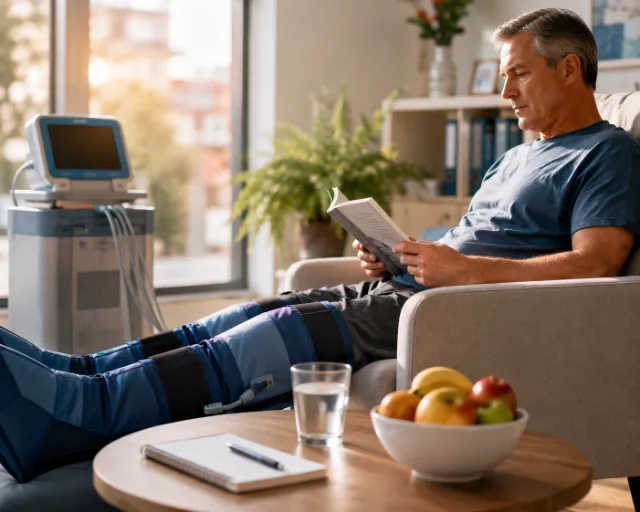
The standard course is 35 sessions: 5 days a week, 60 minutes per session. You return to daily life straight after a session. You lie down and rest during the sessions.
I feel very low. What should I do?
If you have thoughts of harming yourself, do not wait: contact a health professional or your nearest emergency department. In this situation, getting support immediately comes first.
You May Also Be Interested In
Contact us for a free preliminary assessment
Let's talk together about your heart disease and your mood. Our cardiologist will assess whether EECP may be suitable for you. If needed, we will contact your psychiatrist and make a shared plan.
- Non-surgical
- Painless
- Under medical supervision
- Nicosia, Cyprus