
After Stent and Bypass EECP Support
A non-surgical circulatory support added to medication for patients who still have symptoms after a stent or bypass, or who want to support their cardiac rehabilitation.
- Non-surgical
- 35 Sessions
- Painless
In brief
It may help the heart recover after stent or bypass and complement the effect of the treatment already given.
It does not replace medication after a stent or bypass; it complements it.
35 sessions: 5 days a week, 60 minutes per session.
Evidence is limited: small studies and registry data are promising.
What Happens in the Heart After Stent and Bypass?
A stent opens a narrowed vessel from the inside, while a bypass creates a new route around the blocked area. Neither removes the disease itself. For this reason vascular health requires lifelong follow-up.
Opened or bypassed vessel
A stent or graft reopens the path for blood. In other vessels, however, the disease may continue to progress.
Recovering heart muscle
It takes time for the heart muscle to strengthen after a procedure. Cardiac rehabilitation is an important part of this process.
Small vessels
Even when a large vessel has been opened, impaired circulation in the small vessels can keep symptoms going. This should be investigated separately.
Hover over or tap the cards: the related area is highlighted in the illustration.
Shortness of breath and fatigue
In some patients, shortness of breath and tiring easily on exertion continue after the procedure. These complaints should always be discussed at the follow-up visit.
Reduced exercise capacity
After a long period of illness, muscle strength and endurance may have declined. Regaining confidence also takes time.
Risk of re-narrowing
Re-narrowing can develop over time inside a stent or in a graft. This is why controlling risk factors is important.
What Changes in Circulation with EECP?
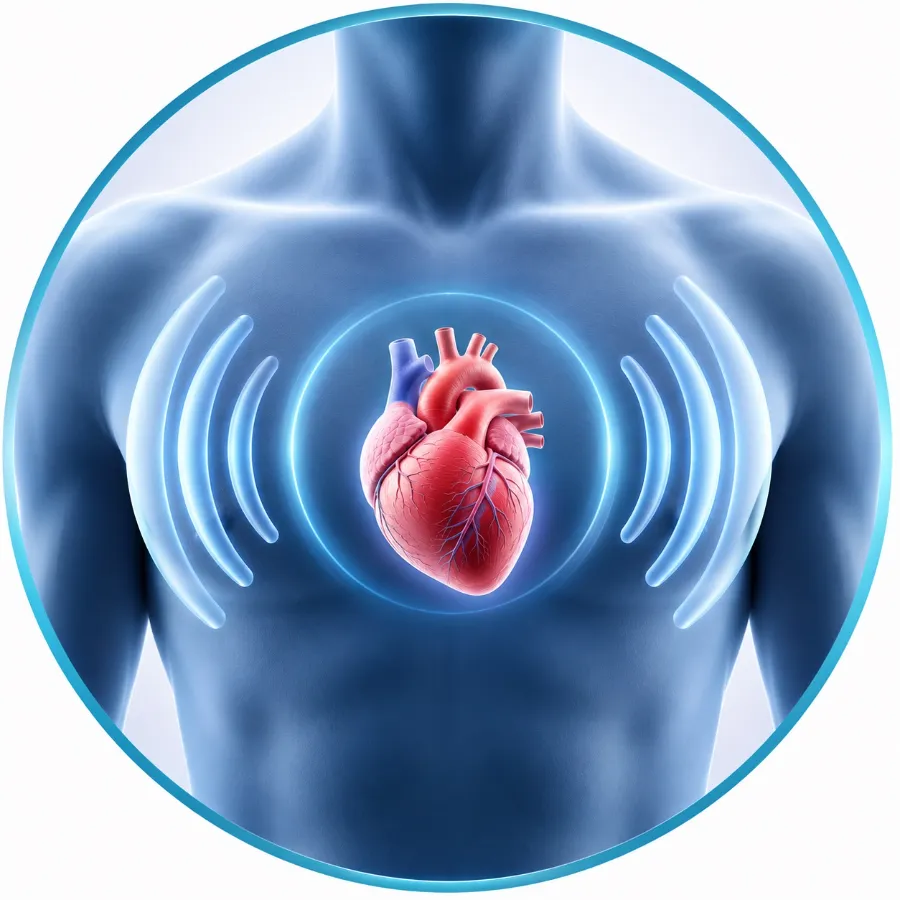
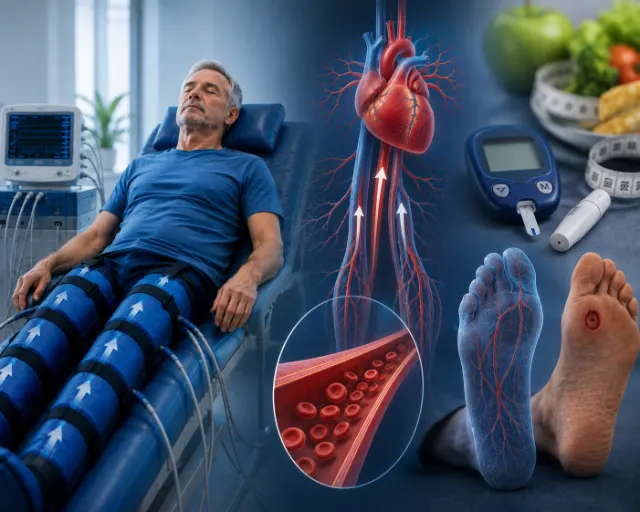
The diagram simply illustrates the support EECP may give to circulation in a heart that still has symptoms after a procedure.
A heart that still has symptoms
- Chest pain or shortness of breath on exertion
- The need for nitrates may continue
- Daily activities are limited
- A new procedure is not always possible
- Fear of being active
Supported circulation
- Blood flow to the coronary vessels increases while the heart relaxes
- The load the heart faces while pumping is reduced
- Reduction of chest pain and shortness of breath is the aim
- Can be used together with cardiac rehabilitation
- You lie down and rest during the session
Schematic illustration; EECP does not replace a stent or bypass and does not remove plaque from the vessel.
External Support with Every Heartbeat
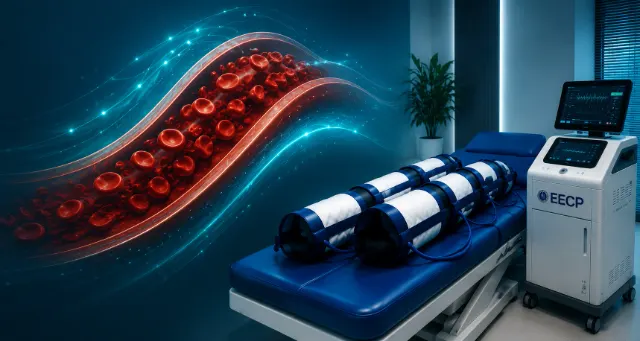
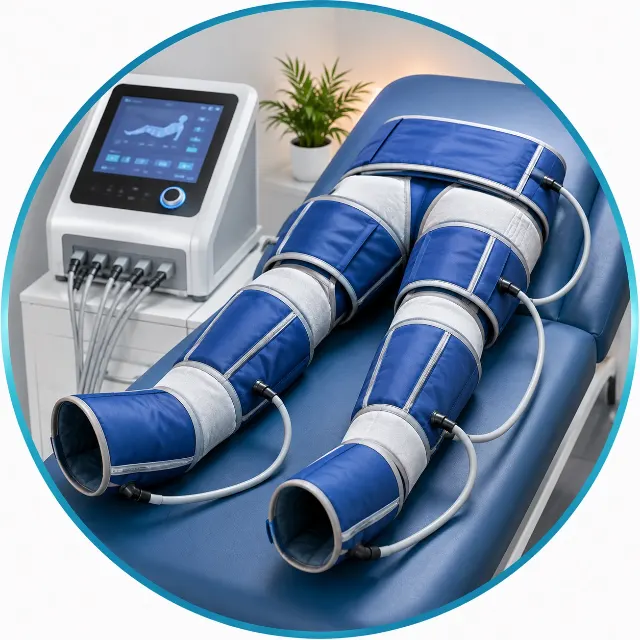
During treatment you lie down and rest. The device monitors your heart rhythm with an ECG and controls the cuffs accordingly. Each session lasts about one hour.
Cuffs inflate
While the heart relaxes, the cuffs on the calves, thighs and buttocks inflate in sequence: first the calves, then the thighs and buttocks.
Blood is directed toward the heart
Blood in the legs is pushed toward the heart and coronary vessels. The aim is for more blood to reach the areas fed by stented or bypassed vessels.
The heart's workload is reduced
The pressure is released just before the heart contracts, so the heart can pump more easily. This cycle repeats with every heartbeat.
What does the patient gain?
As sessions progress, the aim is fewer symptoms and greater exercise capacity. Progress is reviewed together with you at follow-up visits.
Possible Benefits of EECP After Stent and Bypass
Response varies from person to person. The following are aims and gains reported in studies.
Less chest pain
In a small study of patients whose angina continued after bypass, pain class and attack frequency decreased.
Better exercise capacity
In rehabilitation after a vessel-opening procedure, walking distance was found to be better in the group that had EECP added.
Less shortness of breath
In the same studies, improvement in the shortness of breath class (NYHA) was reported.
Support for rehabilitation
It can be added to a cardiac rehabilitation programme that includes exercise and medication. The programme is planned individually.
Without a new procedure
It is a non-surgical option for patients who are not suitable for another procedure. The decision is made after your procedure reports are reviewed together.
Outpatient and painless
It is applied externally with cuffs; you return to daily life after the session. Our health team is with you throughout the session.
Who Is It Suitable For, and Who Not?
The decision is made by our cardiologist after reviewing your procedure reports, ECG and echocardiography. If needed, your treating physician who performed the procedure is also consulted.
✓May be suitable
- Stable patients with continuing chest pain after a stent or bypass
- Patients not suitable for a new procedure
- People with shortness of breath and fatigue after a procedure
- Patients in cardiac rehabilitation whom their cardiologist considers suitable for EECP
- Those with well-adjusted medication and a stable condition
✕Not suitable
- Early period right after a procedure (your cardiologist decides the timing)
- Severe aortic valve regurgitation
- Aortic aneurysm
- Active deep vein thrombosis, vein inflammation
- Uncontrolled high blood pressure
- Severe rhythm disorders
- Marked bleeding tendency and pregnancy
How Does the Treatment Process Work?
Blood pressure and pulse are checked before every session; any surgical wounds are examined separately. At the end of the course, results are reviewed together with our cardiologist.
Questions About EECP After Stent and Bypass
How long after getting a stent can I have EECP?
Timing varies from person to person. Our cardiologist decides after considering the type of procedure, your recovery and the medication you take.
Is EECP suitable if I have had bypass surgery?
Patients who have had bypass surgery are often included in EECP studies. Suitability is determined by reviewing your recovery after surgery and your general condition. Surgical wounds are expected to have healed.
Does EECP prevent a stent from blocking?
There is not enough evidence on this. Taking your medication regularly and controlling risk factors is essential for keeping a stent open. Regular check-ups are also part of the process.
I take blood thinners. Is that a problem?
Blood-thinner use is reviewed separately in the preliminary assessment. EECP is not suitable for patients with a marked bleeding tendency.
Can EECP be done instead of cardiac rehabilitation?
EECP is considered alongside exercise-based cardiac rehabilitation, not instead of it. Whether to plan both together depends on your cardiologist's recommendation.
When will I feel the effect?
In most patients, any change becomes more noticeable in the second half of the course. Results are reviewed at the follow-up visit at the end of the course.
Contact us for a free preliminary assessment
Let's assess with our cardiology team whether EECP may be suitable for your symptoms after a stent or bypass. The preliminary assessment is free of charge. You can reach us by phone or WhatsApp.
- Non-surgical
- Painless
- Under medical supervision
- Nicosia, Cyprus