
Diabetes Complications and EECP
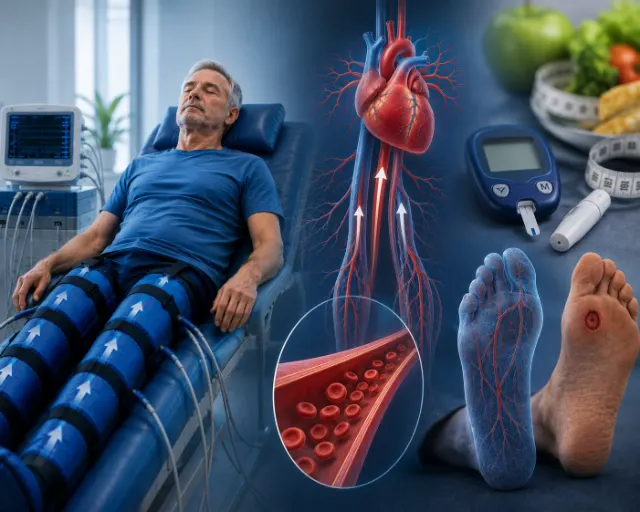
Diabetes can affect not only the large vessels but also the kidneys, eyes and nerves. EECP is a non-surgical support that may be added to diabetes treatment. Studies in this area are promising but small.
- Non-surgical
- 35 Sessions
- Painless
In brief
It may help reduce the development of complications in diabetic patients that are not caused by vessel blockage.
It does not replace diabetes medication, diet, activity or regular eye and kidney checks; it is considered in addition to them.
In a small randomized study, harmful sugar-related products and inflammation markers decreased.
We have not read a long-term study showing that it prevents complications. The evidence is limited.
Which Organs Does Diabetes Affect?
Over the years, high blood sugar can damage small vessels and nerves. Sugar binds to proteins and forms harmful products. These products can increase inflammation and vessel damage; the effects may be seen in the kidneys, eyes and nerves.
Kidneys
The small vessels that act as the kidneys' filter can be damaged. Protein leaking into the urine is an early sign and is followed with a simple urine test.
Eyes
The small vessels at the back of the eye can be affected. This is called diabetic retinopathy and, because it can progress without symptoms, it is monitored with regular eye examinations.
Feet and nerves
Nerve damage can cause numbness, tingling and loss of sensation in the feet. Small wounds that go unnoticed can grow over time.
Hover over or tap the cards: the related area is highlighted in the illustration.
Blood sugar control
Insulin produced by the pancreas regulates blood sugar. In type 2 diabetes the body does not respond to insulin well enough.
Small vessels
The inner vessel lining regulates the vessel's ability to widen. In diabetes this function can weaken and flow to the organs can decrease.
Inflammation and oxidative stress
High sugar can increase inflammation and oxidative stress in the body. These are markers that can be measured with blood tests, and in studies the effect of EECP was followed with these markers.
Diabetes and Vessels: Before and With EECP
The comparison below simply illustrates the support EECP aims to provide. The effect varies from person to person; your progress is followed with regular tests.
Burden of diabetes
- Increase in harmful sugar-related products
- Inflammation and oxidative stress
- Loss of function in small vessels
Supported vessels and metabolism
- Flow stimulating the inner vessel lining
- A decrease in inflammation markers is the aim
- Diabetes treatment continues unchanged
Schematic illustration. EECP does not treat diabetes; it does not replace diabetes treatment.
How Does EECP Help?
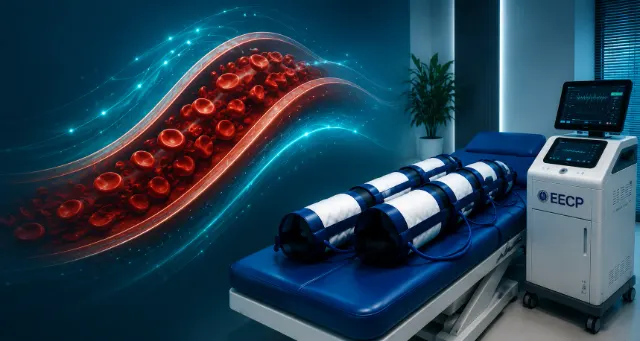
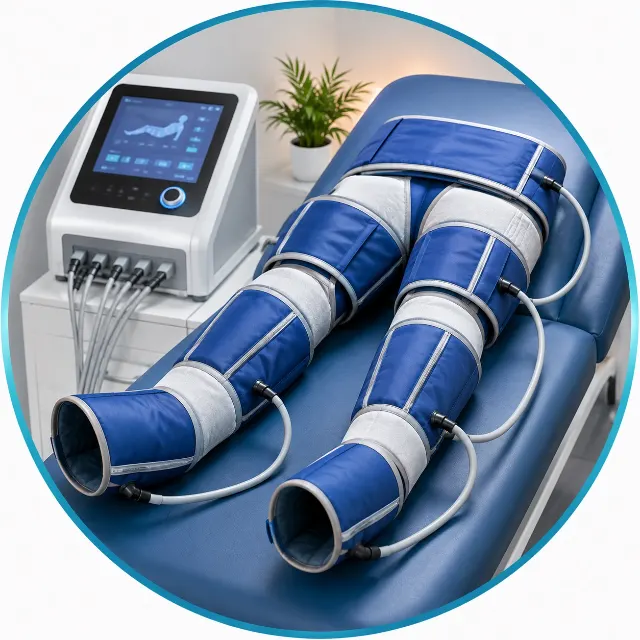
During treatment you lie down and rest. The device monitors your heart rhythm with an ECG and controls the cuffs accordingly.
Cuffs inflate
While the heart relaxes, the cuffs on the calves, thighs and buttocks inflate in sequence: first the calves, then the thighs and buttocks.
Blood flow speeds up
Cuff pressure increases flow in the vessels. The increased flow stimulates the release of nitric oxide from the inner vessel lining.
The heart's workload is reduced
The pressure is released just before the heart contracts, so the heart can pump more easily. This cycle repeats with every heartbeat.
Tests are monitored
Sugar, kidney and, if needed, eye checks are compared before and after the course. The assessment is made together with your doctors.
What Has Been Reported in Studies?
Response varies from person to person. The following are aims and gains reported in studies.
Harmful sugar-related products
In a small randomized study, these products decreased markedly after 35 sessions and stayed low at month 6.
Inflammation and oxidative stress
In the same study, markers of vessel inflammation and oxidative stress decreased in the first weeks.
Nitric oxide
Vessel-widening nitric oxide products rose by about 50 percent in the two weeks after the course.
Kidney function
A review reported an increase in the kidney filtration rate in heart patients after a 35-session course.
Eyes
Expert opinion cites studies in which eye vessel flow and vision improved in diabetic retinopathy.
Feet and nerves
Expert opinion reports positive effects in diabetic foot and nerve damage.
Who Is It Suitable For, and Who Not?
Your sugar control, kidney function and eye examination are reviewed first. The decision on EECP is made individually by our cardiologist, in agreement with your other doctors.
✓May be suitable
- Patients with type 2 diabetes who maintain their lifestyle and medication
- Patients under specialist follow-up in whom diabetic retinopathy or kidney involvement has begun
- Patients with heart or vascular disease accompanying diabetes
- Patients who need support despite lifestyle and medication for sugar control
✕Not suitable
- Active infection or open wound on the leg or foot
- Severe aortic valve regurgitation
- Aortic aneurysm
- Active deep vein thrombosis, vein inflammation
- Uncontrolled high blood pressure
- Severe rhythm disorders
- Marked bleeding tendency and pregnancy
How Does the Treatment Process Work?
Blood pressure and pulse are checked before every session. At the end of the course, results are reviewed together with our cardiologist. In patients with diabetes, blood sugar is also asked about before the session.
Common Questions About Diabetes Complications and EECP
Does EECP prevent diabetes complications?
We have not read a long-term study showing that it does. In a small randomized study, harmful sugar-related products and inflammation markers decreased.
I have diabetic retinopathy. Is EECP suitable?
Expert opinion in China states that EECP may be considered. The decision is made together after your ophthalmologist's examination and our cardiologist's assessment. Your eye treatment continues unchanged.
I have kidney disease. Can I have EECP?
EECP has been tried in kidney patients, including haemodialysis patients, in several studies. Your kidney function and fluid balance are assessed together with your nephrologist. The decision is made after this assessment.
How does this page differ from the vascular complications in diabetes page?
That page covers blockages in the vessels of the heart, brain and legs. This page focuses on other problems related to the kidneys, eyes, nerves and inflammation. We recommend reading the two pages together.
Will my diabetes medication change?
Your medication continues according to your doctor's plan. During the course your doctor may monitor your sugar more often; only they decide on medication changes.
How many sessions are needed?
The standard course is 35 sessions: 5 days a week, 60 minutes per session. You return to daily life straight after a session. When the course ends, your tests are repeated and compared.
You May Also Be Interested In

Contact us for a free preliminary assessment
Let's review your tests related to diabetes and its complications together. All you need to do is bring your latest sugar, kidney and eye results. Our cardiologist will openly discuss the role EECP may play for you; if it is not suitable, we will say so too.
- Non-surgical
- Painless
- Under medical supervision
- Nicosia, Cyprus