
Ischemic Eye Diseases and EECP
A long-term reduction in blood flow to the eye can lead to ischemic eye diseases that gradually impair vision. This is often a sign of narrowing in the carotid artery. EECP has been studied in these patients; the evidence is limited and mixed.
- Non-surgical
- 35 Sessions
- Painless
In brief
May support improvement in ischemic eye diseases caused by impaired circulation in the eye's vessels.
Eye ischemia can be a warning sign of advanced carotid narrowing and of a stroke that may develop later.
Treatment is a process carried out jointly by the ophthalmologist, neurologist and vascular surgeon. EECP does not replace it.
Retrospective data from China are positive; the controlled study in optic nerve disease is negative.
What Happens When the Eye Is Starved of Blood?
The eye receives its blood from the ophthalmic artery, which branches off the internal carotid artery. When the carotid artery narrows severely, blood flow to the eye decreases; this is called ocular ischemic syndrome. Because symptoms can be confused with age-related vision decline, diagnosis is often delayed.
Retina
When the retina receives too little blood over a long period, vision can become blurred. The ophthalmologist evaluates this with a fundus examination.
Optic nerve
When the blood supply to the optic nerve is impaired, losses in the visual field can occur. This picture is called ischemic optic neuropathy.
Carotid narrowing
The most common cause of ocular ischemic syndrome is occlusive disease of the common or internal carotid artery. That is why a neck ultrasound is important.
Hover over or tap the cards: the related area is highlighted in the illustration.
Stroke risk
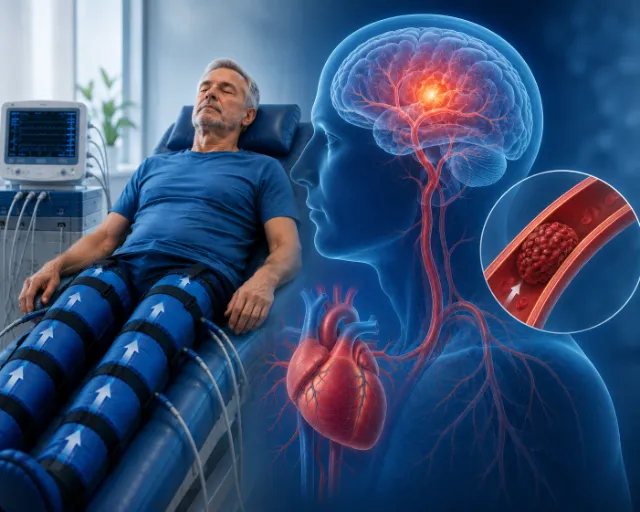
Eye ischemia can be a sign of advanced disease in the vessels that feed the brain too. That is why a neurological evaluation is also done.
Heart
Heart and vascular diseases share the same risk factors. A person with an eye vessel problem also needs a cardiac evaluation.
Risk factors
Blood pressure, sugar, cholesterol and smoking wear down the eye's blood vessels too. Treating these factors is the foundation of prevention.
Eye Circulation: Before and With EECP
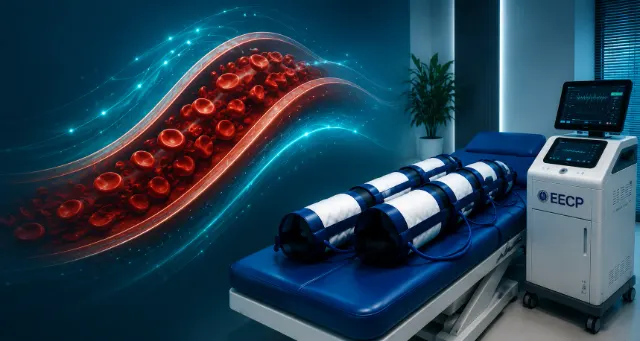
The comparison below shows in simple form the circulatory support targeted with EECP. An effect on eye diseases has not been proven.
An eye starved of blood
- Slowly progressing vision decline
- Advanced narrowing in the carotid artery
- Heart and vascular risk factors
Circulatory support alongside treatment
- Increased flow in the head and neck vessels is targeted
- Eye and vascular surgery treatments continue
- Vision is measured regularly
Schematic illustration. EECP does not open a carotid narrowing; it does not replace surgical or eye treatments.
How Is EECP Applied?
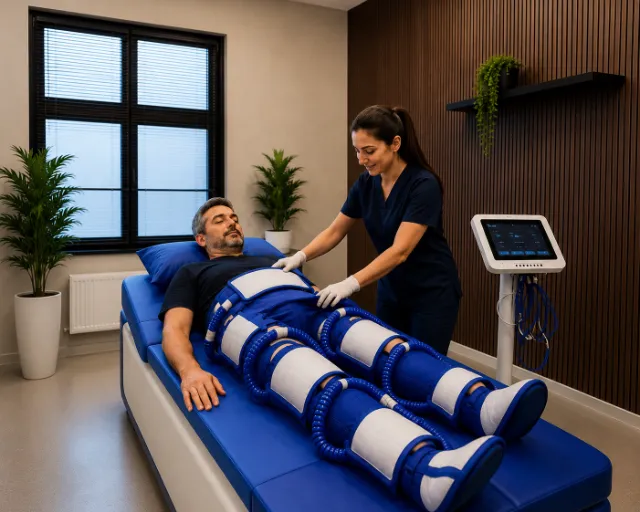
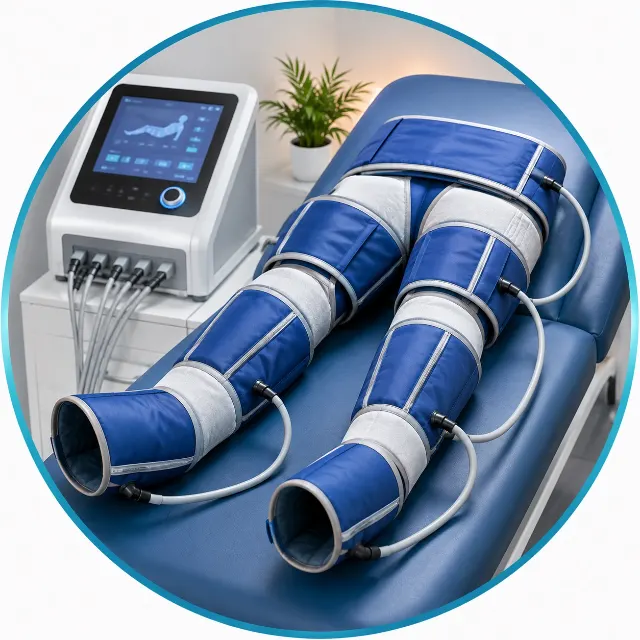
During treatment you lie down and rest. The device monitors your heart rhythm with an ECG and controls the cuffs accordingly.
Cuffs inflate
While the heart relaxes, the cuffs on the calves, thighs and buttocks inflate in sequence: first the calves, then the thighs and buttocks.
Blood is directed toward the head
The pressure that rises while the heart relaxes also reaches the head and neck vessels. Its effect on eye circulation varies from person to person.
The heart's workload is reduced
The pressure is released just before the heart contracts, so the heart can pump more easily. This cycle repeats with every heartbeat.
Vision is monitored
Visual acuity and fundus findings before and after the course are compared by your ophthalmologist.
What Have Studies Shown?
Below we summarize the key information from studies and guidelines. Response varies from person to person.
People with carotid narrowing
In a retrospective study reported in an expert opinion, significant improvement in vision was reported in patients who had EECP added to medication.
Early start
The same study reported that the earlier treatment was started, the better the result.
Eye vessel flow
The expert opinion reports that flow velocity in the eye arteries increased with EECP in optic nerve disease.
Non-surgical and painless
It is applied externally with cuffs; you lie down and rest throughout the session.
Tolerability
In a controlled study of patients with optic nerve disease, EECP was well tolerated by all patients.
Multifaceted treatment
According to the review, treatment includes laser, eye medications and, if needed, carotid artery surgery.
Who Is It Suitable For, and Who Not?
First, an eye examination, neck vessel ultrasound and neurological evaluation are done. Treatment of carotid narrowing is planned with your vascular surgeon and neurologist. The decision on EECP is made by our cardiologist, alongside these treatments.
✓May be suitable
- Patients diagnosed with ocular ischemic syndrome whose treatment has been planned
- Patients with carotid narrowing who are under ophthalmologist follow-up
- Patients who want to support vascular health after a past retinal vessel occlusion
✕Not suitable
- Newly started vision loss: go to the emergency room immediately first
- Severe aortic valve regurgitation
- Aortic aneurysm
- Active deep vein thrombosis, vein inflammation
- Uncontrolled high blood pressure
- Severe rhythm disorders
- Marked bleeding tendency and pregnancy
How Does the Treatment Process Work?
Blood pressure and pulse are checked before every session. At the end of the course, results are reviewed with our cardiologist. For eye patients, vision measurements are taken on your ophthalmologist's schedule.
Frequently Asked Questions About Ischemic Eye Diseases and EECP
Will EECP improve my vision?
Improvement was reported in retrospective Chinese studies. In the controlled study on optic nerve disease, however, there was no difference; so the result cannot be guaranteed.
Why does eye ischemia matter?
According to the review, ocular ischemic syndrome can be a warning sign of advanced carotid narrowing and of a stroke that may develop later. That is why the neck vessels are also examined.
Can I have EECP instead of carotid surgery?
No. The decision on surgery belongs to your vascular surgeon and neurologist. EECP does not replace this treatment.
How does this page differ from the sudden vision loss page?
The sudden vision loss page covers emergencies. This page focuses on slower-progressing, long-term eye ischemia.
Will I keep taking my medication?
Yes. You should continue your medication as recommended by your cardiologist. Any change to medication is decided only by your doctor.
How many sessions are needed?
The standard course is 35 sessions: 5 days a week, 60 minutes per session. The plan is aligned with your ophthalmologist's follow-up, and vision measurements are repeated regularly.
You May Also Be Interested In



Contact us for a free preliminary assessment
If you have a problem with your eye vessels, contact us with your eye and neck vessel test results. Our cardiologist will openly discuss where EECP fits for you.
- Non-surgical
- Painless
- Under medical supervision
- Nicosia, Cyprus