
Microvascular Heart Disease and EECP
Even when the large arteries look open on angiography, impaired circulation in the heart's small vessels can cause chest pain. EECP is a non-surgical option that may be added to medication in these patients.
- Non-surgical
- 35 Sessions
- Painless
In brief
May help ease chest pain and fatigue caused by impaired circulation in the heart's small vessels.
It does not replace medication or lifestyle changes; it complements and supports them.
35 sessions: 5 days a week, 60 minutes per session; no needles, no surgery.
Evidence is limited: small controlled studies are promising.
What Happens in the Heart's Small Vessels?
The smallest vessels that feed the heart muscle may not widen enough when needed. Even without marked narrowing in the large arteries, the heart muscle may not receive enough blood during exertion. For this reason, diagnosis is often delayed.
Small vessels that cannot widen
When small vessels cannot widen on demand, blood flow to the heart muscle does not increase. These vessels are not visible on angiography.
Large vessels that look open
On angiography the large vessels may look normal or mildly narrowed. This is why the cause of symptoms can be overlooked.
Chest pain
Chest pain may occur with exertion or sometimes at rest. It can last a long time, recur, and affect daily life.
Hover over or tap the cards: the related area is highlighted in the illustration.
Shortness of breath
In some patients, shortness of breath accompanies chest pain. Climbing stairs or hills can become harder.
Fatigue
Tiring easily and reduced exercise capacity are common complaints. Daily tasks and work life can suffer.
Inner vessel lining
Impaired function of the inner vessel lining (endothelium) plays a role in the failure of small vessels to widen. Smoking, diabetes and high blood pressure can impair this function.
What Changes in Circulation with EECP?
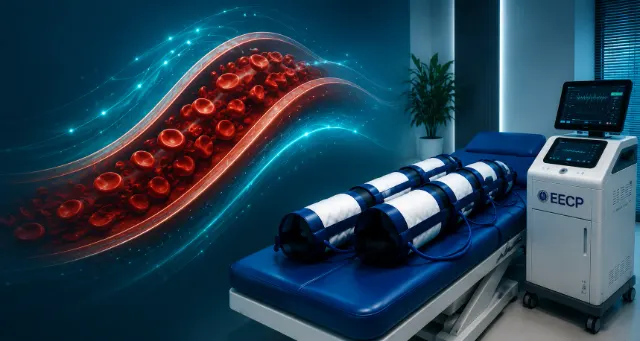
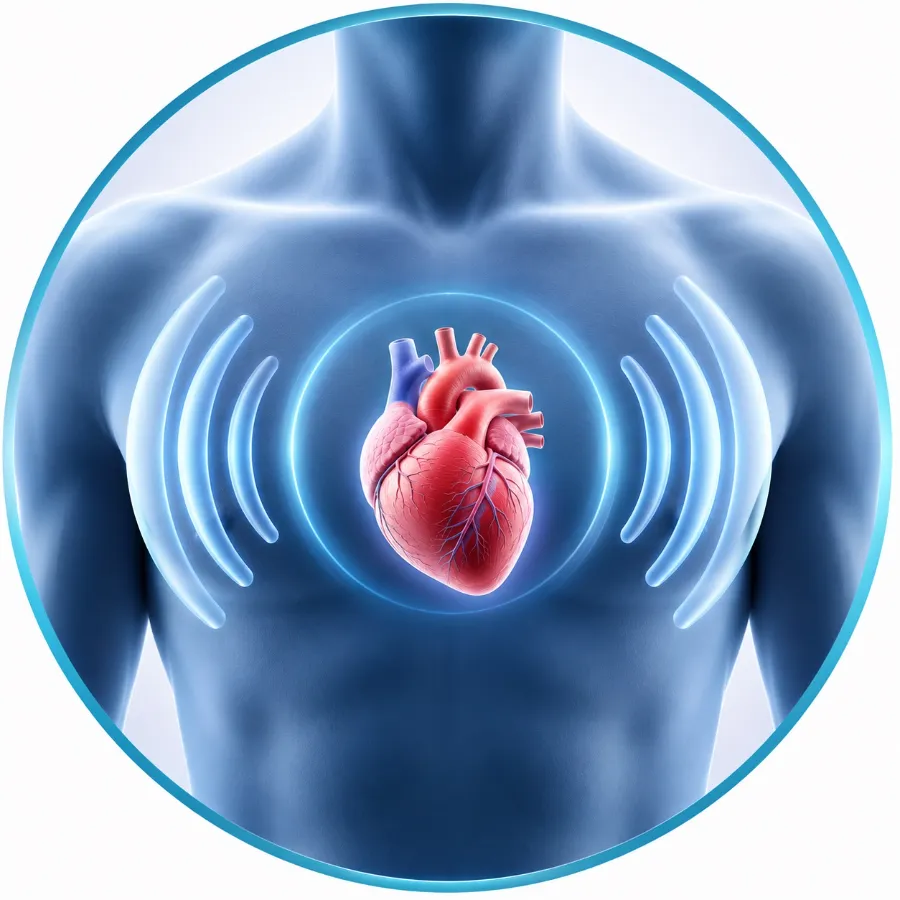
The diagram simply illustrates the support EECP may give to heart circulation in small vessel disease. The pressure repeated with every heartbeat supports coronary circulation from the outside.
Small vessels that cannot widen
- Blood flow to the heart muscle does not increase with exertion
- Chest pain and shortness of breath
- Angiography may look normal
- Daily activities are limited
- Uncertainty and recurring pain can increase anxiety
Supported microcirculation
- Coronary circulation is supported while the heart relaxes
- An increase in coronary flow reserve has been reported
- Reduction of chest pain is the aim
- Used together with medication
- You lie down and rest comfortably during the session
Schematic illustration; small vessel circulation is simplified.
External Support with Every Heartbeat
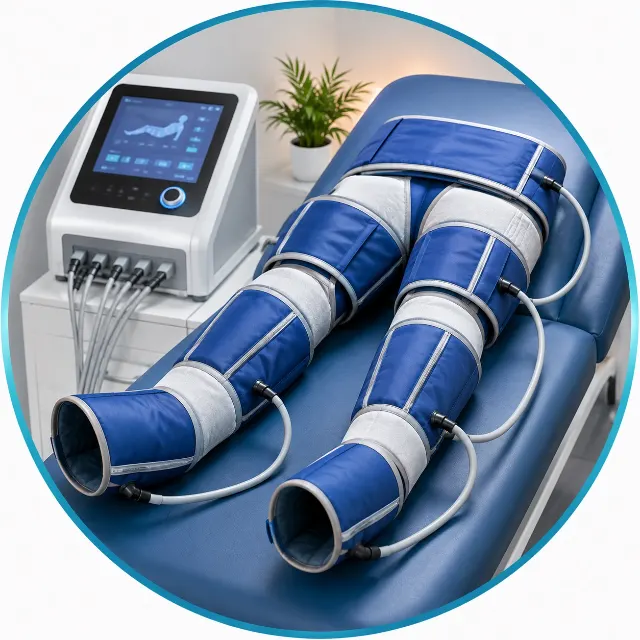
During treatment you lie down and rest. The device monitors your heart rhythm with an ECG and controls the cuffs accordingly. Each session lasts about one hour.
Cuffs inflate
While the heart relaxes, the cuffs on the calves, thighs and buttocks inflate in sequence: first the calves, then the thighs and buttocks.
Blood is directed toward the heart
Blood in the legs is pushed toward the heart and coronary vessels. The aim is to support flow in the small vessels and the inner vessel lining.
The heart's workload is reduced
The pressure is released just before the heart contracts, so the heart can pump more easily. This cycle repeats with every heartbeat.
What does the patient gain?
As sessions progress, the aim is less chest pain and greater exercise capacity. Progress is reviewed together with you at follow-up visits.
Possible Benefits of EECP in Microvascular Heart Disease
Response varies from person to person. The following are findings reported in studies.
Increase in coronary flow reserve
In one controlled study, coronary flow reserve increased after 4 weeks of EECP compared with the control group. It was measured with cardiac ultrasound.
Less chest pain
In the same study the angina class decreased and quality-of-life questionnaire scores improved. Assessment used standard questionnaires.
Support for the inner vessel lining
An analysis of randomized studies reported improvement in the vessel widening response (FMD). A healthy endothelium is important for small vessels to widen.
Heart function
In the group receiving EECP together with rehabilitation, heart function indicators were found to be better. In this study rehabilitation was given to both groups.
A non-surgical option
In small vessel disease, EECP offers a non-surgical form of support. The decision is made after your test results are reviewed together.
Outpatient and painless
It is applied externally with cuffs; you return to daily life after the session. Our health team is with you throughout the session.
Who Is It Suitable For, and Who Not?
Diagnosis is made with an exercise test, imaging and, where needed, specific flow measurements. The decision on EECP is made individually by our cardiologist. Additional tests may be requested.
✓May be suitable
- Patients diagnosed with microvascular disease whose symptoms persist despite medication
- Patients with normal or mildly narrowed arteries on angiography who continue to have chest pain
- People with limited exercise capacity who struggle with daily tasks
- Patients who can take part in cardiac rehabilitation
- Patients in stable condition who can attend regular follow-up
✕Not suitable
- Cases where chest pain has a non-cardiac cause
- Severe aortic valve regurgitation
- Aortic aneurysm
- Active deep vein thrombosis, vein inflammation
- Uncontrolled high blood pressure
- Severe rhythm disorders
- Marked bleeding tendency and pregnancy
How Does the Treatment Process Work?
Blood pressure and pulse are checked before every session. At the end of the course, results are reviewed together with our cardiologist and a follow-up plan is made.
Questions About Microvascular Heart Disease and EECP
My angiogram came back clean but I have chest pain. Why?
Even when the large vessels are open, impaired circulation in the small vessels can cause chest pain. This is investigated with specialized tests. Treatment is not planned before the diagnosis is confirmed.
Can a stent be placed in microvascular disease?
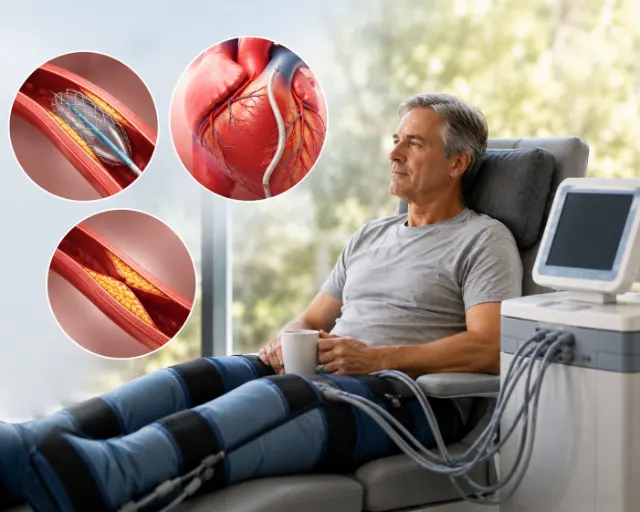
Stents cannot be placed in small vessels. Treatment is based on medication, control of risk factors and lifestyle changes such as regular exercise.
Does EECP heal the small vessels?
Small studies have reported an increase in coronary flow reserve. There are no large studies yet showing a lasting effect. Results should be interpreted with caution.
Will I keep taking my medication?
Yes. You should continue your medication as recommended by your cardiologist. Any change to medication is decided only by your doctor.
Is the treatment painful?
No. As the cuffs inflate you feel strong squeezing in the legs; you lie down and rest during the session. If you feel discomfort, the pressure can be adjusted.
When will I feel the effect?
In studies, assessment was made at the end of the course. Response varies from person to person and is reviewed at the follow-up visit. Results are reviewed together with you.
Contact us for a free preliminary assessment
Could small vessels be the cause of your chest pain? Let our cardiology team assess with you, free of charge, whether EECP may be suitable for you. You can reach us by phone or WhatsApp.
- Non-surgical
- Painless
- Under medical supervision
- Nicosia, Cyprus