
Stroke Prevention and EECP
A significant share of strokes can be prevented. The foundation of prevention is blood pressure control, an active life and a Mediterranean-style diet. EECP does not replace this foundation; it is an additional method being studied for its effect on brain circulation.
- Non-surgical
- 35 Sessions
- Painless
In brief
It is being studied as support for the brain in healthy people, with the aim of lowering the chance of a future stroke.
Blood pressure control is the critical step in stroke prevention; current guidelines emphasize this in particular.
In healthy volunteers, flow to the brain did not increase during EECP; the brain regulates its own blood flow.
That EECP lowers stroke risk has not been shown in the studies we reviewed. The evidence is limited.
What Factors Raise Stroke Risk?
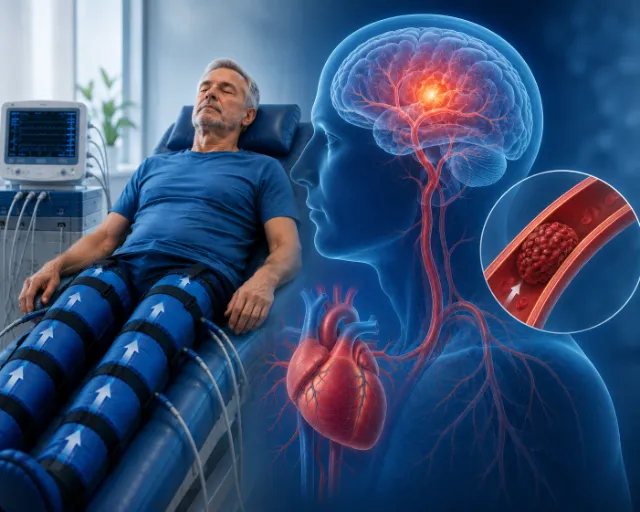
A stroke occurs when blood flow to the brain suddenly decreases or a vessel bleeds. Risk builds up over years, often without symptoms. This is why early screening and risk control are important.
Narrowing in the carotid arteries
Plaque can build up in the neck vessels. Fragments that break off can travel to the brain and cause a stroke.
The brain's small vessels
High blood pressure wears down the brain's small vessels over the years. This damage can progress silently.
Heart rhythm
An irregular heart rhythm can lead to clots forming in the heart. If a clot travels to the brain, a stroke develops. For this reason, rhythm disorders are screened for separately.
Hover over or tap the cards: the related area is highlighted in the illustration.
Heart and blood pressure
Blood pressure is the pressure that the blood pumped by the heart exerts on the vessel wall. Guidelines regard blood pressure control as critical in stroke prevention.
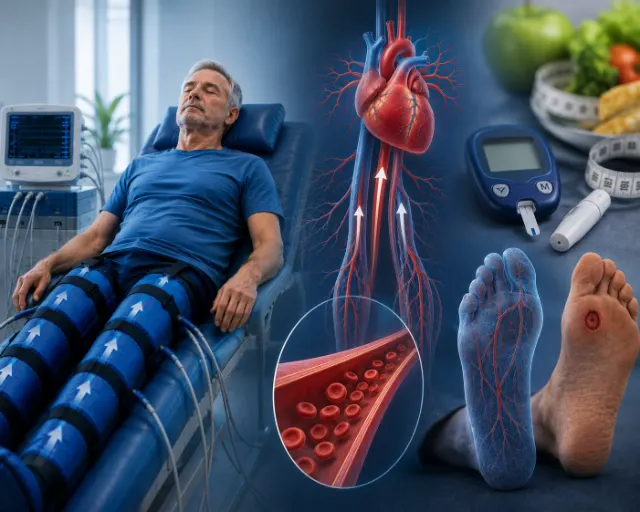
Blood sugar
Diabetes damages both large and small vessels. Blood sugar control also matters for the brain's vessels.
Inactivity
Staying inactive for long periods during the day is linked to a higher stroke risk. Guidelines recommend regular activity.
Brain Circulation: Before and With EECP
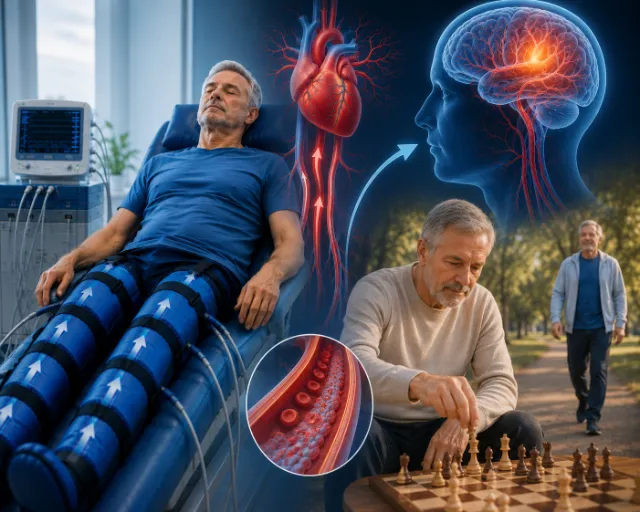
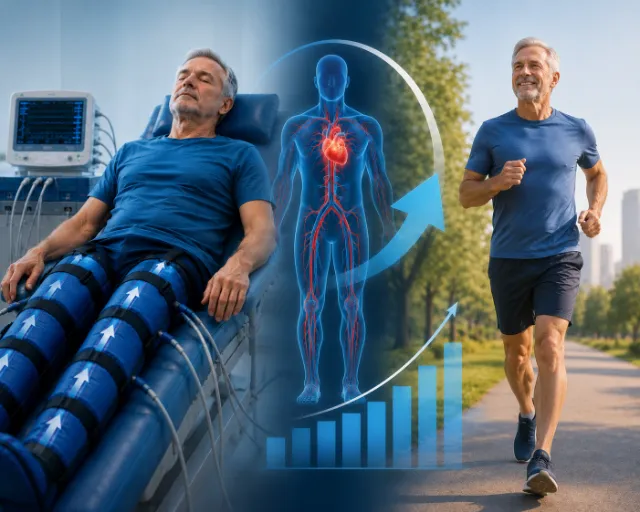
The comparison below simply illustrates the circulatory support EECP aims to provide. This support does not replace treatment of risk factors; your blood pressure and sugar treatment continues unchanged.
Brain vessels at risk
- Narrowing in a carotid or brain vessel
- Fluctuations in blood pressure
- Sedentary lifestyle
Supported brain circulation
- Where there is narrowing, the aim is higher flow
- Blood pressure and pulse are measured at every session
- Treatment of risk factors continues unchanged
Schematic illustration. EECP does not remove plaque from the vessel.
How Does EECP Affect Brain Circulation?
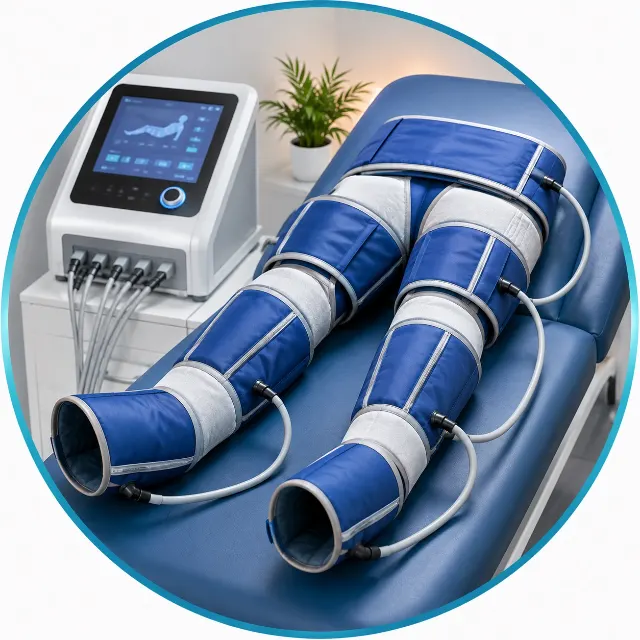
During treatment you lie down and rest. The device monitors your heart rhythm with an ECG and controls the cuffs accordingly.
Cuffs inflate
While the heart relaxes, the cuffs on the calves, thighs and buttocks inflate in sequence: first the calves, then the thighs and buttocks.
Pressure toward the brain increases
The pressure that rises while the heart relaxes is also reflected in the vessels going to the brain. A healthy brain regulates this flow by itself.
The heart's workload is reduced
The pressure is released just before the heart contracts, so the heart can pump more easily. This cycle repeats with every heartbeat.
Risk follow-up continues
Blood pressure and pulse are measured throughout the course. Your risk factors are followed together with neurology and cardiology.
Stroke Risk and EECP: What Has Been Reported?
Response varies from person to person. The following are aims and gains reported in studies.
Carotid artery flow
In people with neurological disease, flow in the internal carotid artery rose by an average of 6.7 percent during EECP.
Non-surgical and painless
It is applied externally with cuffs; you lie down and rest throughout the session.
Blood pressure fluctuations
In patients who had recently had a stroke, beat-to-beat blood pressure variability decreased after 35 sessions.
Transient ischaemic attack
A consensus of Chinese experts lists EECP among the areas of use in transient ischaemic attack.
Measurement at every session
Blood pressure and pulse are checked before and after every session.
Part of a prevention plan
EECP is considered together with a Mediterranean-style diet, regular activity and blood pressure treatment.
Who Is It Suitable For, and Who Not?
Your stroke risk is assessed first. Blood pressure, heart rhythm, sugar and neck vessels are considered together. The decision on EECP is made together with our cardiologist and, if needed, your neurologist.
✓May be suitable
- People who have had a transient ischaemic attack whose cause has been investigated and treatment started
- People under follow-up with narrowing found in brain or neck vessels
- Adults with several risk factors and blood pressure under control
- Patients who recently had a stroke, are on treatment to prevent recurrence and have blood pressure under control
✕Not suitable
- Aneurysm in a brain vessel
- Newly started stroke symptoms: in this case go to the emergency department immediately
- Severe aortic valve regurgitation
- Aortic aneurysm
- Active deep vein thrombosis, vein inflammation
- Uncontrolled high blood pressure
- Severe rhythm disorders
- Marked bleeding tendency and pregnancy
How Does the Treatment Process Work?
Blood pressure and pulse are checked before every session. At the end of the course, results are reviewed together with our cardiologist. For prevention-related enquiries, neck vessel and rhythm assessment is reviewed before treatment.
Common Questions About Stroke Prevention and EECP
Does EECP reduce stroke risk?
This has not been shown in the studies we reviewed. In a retrospective study of 798 patients who had had a heart attack, the stroke rate was also not found to differ among those who received EECP.
I'm healthy. Should I have EECP for my brain circulation?
In healthy volunteers, flow to the brain did not increase during EECP. In healthy people the foundation of prevention is control of risk factors.
I've had a transient ischaemic attack (TIA). Is EECP suitable?
A transient ischaemic attack is a serious warning, and its cause must be investigated first. EECP can be discussed with your neurologist only after this assessment and treatment have begun.
I have narrowing in my carotid artery. Can I have EECP?
The degree of narrowing and the need for treatment are first assessed by a vascular surgeon or neurologist. EECP does not replace these treatments; the decision on suitability is made with our cardiologist.
Will I keep taking my medication?
Yes. You should continue your medication as recommended by your cardiologist. Any change to medication is decided only by your doctor.
How many sessions are needed?
The standard course is 35 sessions: 5 days a week, 60 minutes per session. You return to daily life straight after a session. When the course ends, follow-up of your risk factors continues with your doctor.
You May Also Be Interested In

Contact us for a free preliminary assessment
Let's talk together about your stroke risk and the role EECP may play for you. Our cardiologist will review your blood pressure measurements, tests and vessel imaging. If EECP is not suitable for you, we will say so clearly.
- Non-surgical
- Painless
- Under medical supervision
- Nicosia, Cyprus