
Sudden Hearing Loss EECP Support in Treatment
Sudden hearing loss requires rapid assessment. According to guidelines, the first steps are a hearing test and, in suitable patients, steroid treatment. EECP is a method that has been studied in addition to these treatments, with limited evidence.
- Non-surgical
- 35 Sessions
- Painless
In brief
It may support treatment in patients with sudden hearing loss and may help hearing recovery.
Time matters in sudden hearing loss; guidelines recommend a hearing test as soon as possible and within the first 14 days.
In one small study, flow in the neck vessels increased during EECP and hearing improved in some of the patients.
There is only one study and it has no control group. EECP does not replace guideline treatments.
What Happens in Sudden Hearing Loss?
Sudden hearing loss develops within hours or a few days and usually affects one ear. In most cases no cause is found. Ringing in the ear and dizziness may accompany it.
Inner ear
The inner ear cells that convert sound into nerve signals are very delicate. These cells need a steady and sufficient blood flow.
Neck vessels
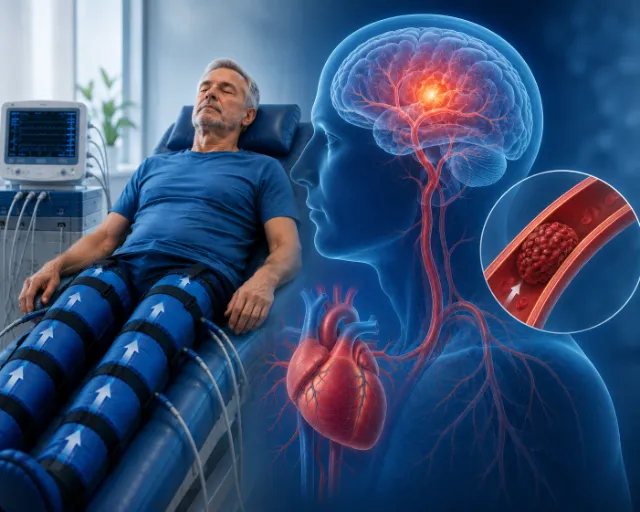
Blood going to the inner ear comes from the neck vessels. In one small study, flow in these vessels increased during EECP.
Hearing nerve and brain
Guidelines recommend an MRI or a special hearing test to exclude other causes involving the hearing nerve.
Hover over or tap the cards: the related area is highlighted in the illustration.
Heart and blood pressure
Cardiovascular disease can affect circulation throughout the body. For this reason a heart and blood pressure assessment is made before EECP.
Small vessels
The vessels that feed the inner ear are very thin. Flow here cannot be measured directly; in the studies, flow in the neck vessels was measured instead.
Balance
The inner ear is also involved in balance. For this reason dizziness and unsteadiness can accompany sudden hearing loss.
Inner Ear Circulation: Before and With EECP
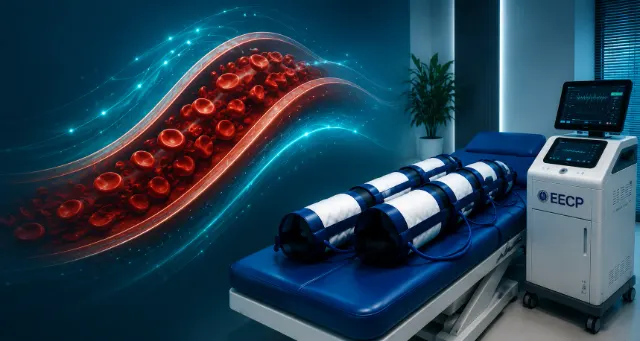
The comparison below simply illustrates the circulatory support EECP aims to provide. The effect varies from person to person; your hearing is followed with tests.
Sudden hearing loss
- Sudden hearing decline in the ear
- Ringing or a feeling of fullness
- Sometimes dizziness
Additional support to guideline treatment
- Higher flow in the neck vessels is the aim
- Steroids and other treatments are managed by the ENT doctor
- Followed with a hearing test
Schematic illustration. EECP does not replace guideline treatments in sudden hearing loss.
How Does EECP Help?
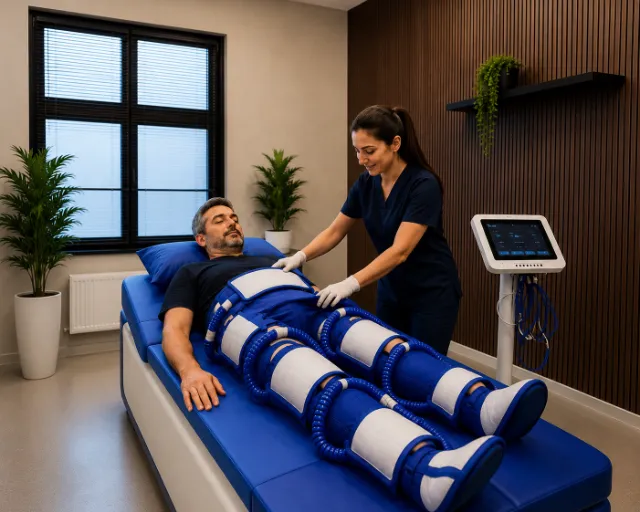
During treatment you lie down and rest. The device monitors your heart rhythm with an ECG and controls the cuffs accordingly.
Cuffs inflate
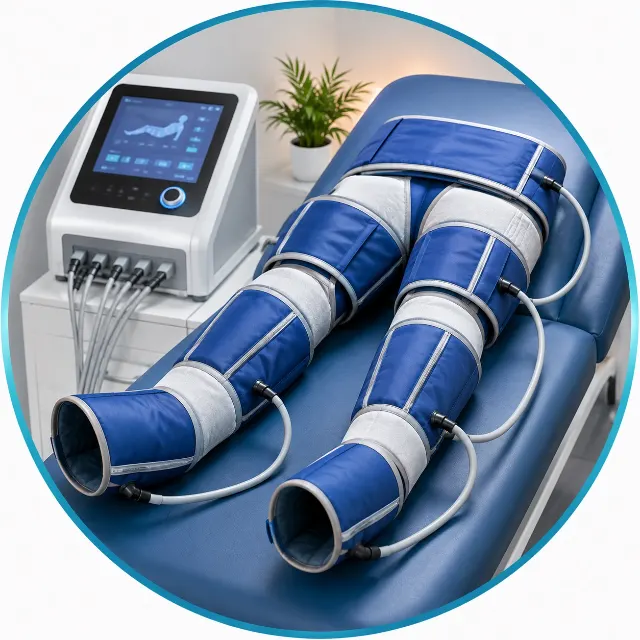
While the heart relaxes, the cuffs on the calves, thighs and buttocks inflate in sequence: first the calves, then the thighs and buttocks.
Blood is directed toward the head
The pressure that rises while the heart relaxes is also reflected in the neck vessels. In one small study, flow in the internal carotid artery increased by 19 percent.
The heart's workload is reduced
The pressure is released just before the heart contracts, so the heart can pump more easily. This cycle repeats with every heartbeat.
Hearing is monitored
Hearing tests are compared before and after the course. The assessment is made together with your ENT specialist.
What Has Been Reported in Studies?
Response varies from person to person. The following are aims and gains reported in studies.
Neck vessel flow
In a study of 33 patients, flow in the internal carotid artery rose by 19 percent and flow in the vertebral artery by 11 percent during treatment.
Hearing
In 28 percent of patients, the hearing threshold improved by an average of 19 dB.
Ringing in the ear
The severity of ringing decreased in 47 percent of patients.
Persistence
Expert opinion from China reports that the improvement in hearing was maintained at one-year hearing test follow-up.
Guideline treatment
The guideline offers steroids within the first two weeks and, in some patients, hyperbaric oxygen options.
Under medical supervision
Sessions are carried out under medical supervision, in agreement with your ENT doctor's treatment.
Who Is It Suitable For, and Who Not?
An ENT examination and hearing test come first; guideline treatments are started. The decision on EECP is made in addition to these treatments, after our cardiologist's assessment.
✓May be suitable
- Patients diagnosed with sudden sensorineural hearing loss by a hearing test
- Patients whose hearing loss or ringing continues despite standard treatment
- Patients under ENT specialist follow-up who are suitable from a cardiovascular standpoint
- Patients with cardiovascular disease referred by an ENT doctor because of sudden hearing loss
✕Not suitable
- Undiagnosed sudden hearing loss: an ENT examination is needed first
- Severe aortic valve regurgitation
- Aortic aneurysm
- Active deep vein thrombosis, vein inflammation
- Uncontrolled high blood pressure
- Severe rhythm disorders
- Marked bleeding tendency and pregnancy
How Does the Treatment Process Work?
Blood pressure and pulse are checked before every session. At the end of the course, results are reviewed together with our cardiologist. In sudden hearing loss, the session plan is made in line with your ENT doctor's treatment schedule.
Common Questions About Sudden Hearing Loss and EECP
What should I do first in sudden hearing loss?
See an ENT specialist without waiting. Guidelines recommend a hearing test as soon as possible and within the first 14 days. According to the guidelines, rapid diagnosis and treatment may improve the chance of hearing recovery.
Will EECP restore my hearing?
In an uncontrolled study, hearing improved in 28 percent of patients. Because there was no control group, it is not certain whether this was due to EECP.
Can I have EECP instead of steroid treatment?
No. Steroids and other treatments are managed by your ENT specialist. EECP can only be discussed in addition to these and with your ENT doctor's knowledge.
Does it have an effect on ringing in the ear?
In the same study, the severity of ringing decreased in 47 percent of patients. This finding also rests on a small study without a control group.
Does it have side effects?
In the study, complaints such as chest pain were seen in some patients and passed completely when treatment was stopped. Sessions are carried out under medical supervision.
How many sessions are needed?
In the study, treatment was given for one hour a day for 5 days, and in some patients for 10 days. The number of sessions is planned together with your ENT doctor and our cardiologist.
You May Also Be Interested In



Contact us for a free preliminary assessment
If you have had sudden hearing loss, see your ENT specialist first. If you are considering EECP as an additional option, contact us with your hearing test results. Our cardiologist will assess your suitability.
- Non-surgical
- Painless
- Under medical supervision
- Nicosia, Cyprus