
Post-COVID Syndrome and EECP
Fatigue, shortness of breath and brain fog lasting months after COVID can make daily life difficult. Treatment today is symptom-directed support. EECP is being investigated in these patients; early results are promising but rely on studies without a control group.
- Non-surgical
- 35 Sessions
- Painless
In brief
May help with recovery from ongoing problems such as fatigue, shortness of breath and weakness after COVID.
Long COVID treatment is symptom-directed support; EECP does not replace this plan.
In a retrospective study of 231 patients, fatigue, shortness of breath and walking distance improved.
The studies had no control group. Evidence is limited and sham-controlled studies are needed.
What Happens in the Body in Post-COVID Syndrome?
Long COVID is a condition that lasts at least three months after infection and affects daily life. The most common complaints are extreme fatigue, worsening with exertion, brain fog and shortness of breath. No single test establishes the diagnosis.
Shortness of breath
Many patients notice they run out of breath climbing stairs or talking. That is why the lungs and heart are evaluated together.
Chest pain
Chest pain and palpitations are common complaints. Researchers think that a problem in the heart's small vessels may play a role in some patients.
Brain fog
Distraction, forgetfulness and slowed thinking can occur. This is commonly called brain fog and can make working life difficult.
Hover over or tap the cards: the related area is highlighted in the illustration.
Fatigue
Extreme fatigue and low energy are the most common complaint. According to experts, too much exertion can worsen these symptoms; this is called post-exertional malaise.
Inner vessel lining
Researchers think that dysfunction of the inner lining of blood vessels may play a role in long COVID symptoms.
Pulse and dizziness
A fast pulse and dizziness can occur on standing. Experts address this under autonomic nervous system disorders.
After COVID: Before and With EECP
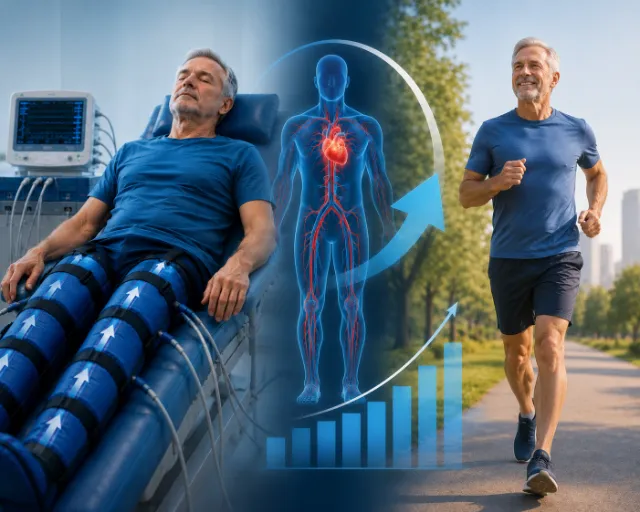
The comparison below shows in simple form the support targeted with EECP. The effect varies from person to person; your progress is monitored with scales.
Long COVID burden
- Extreme fatigue and worsening with exertion
- Shortness of breath and chest pain
- Brain fog and difficulty at work
Passive circulatory support
- Applied lying down, without exertion
- The aim is to stimulate the inner lining of the vessels with flow
- Regular follow-up with fatigue and breathing scales
Schematic illustration. EECP is not a proven treatment for long COVID.
How Is EECP Applied?
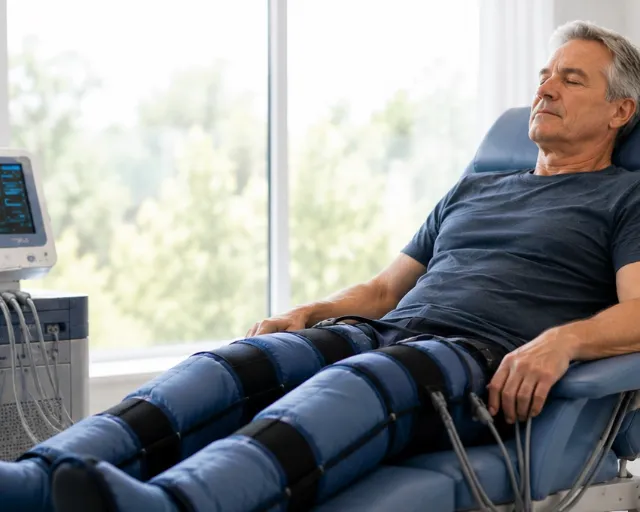
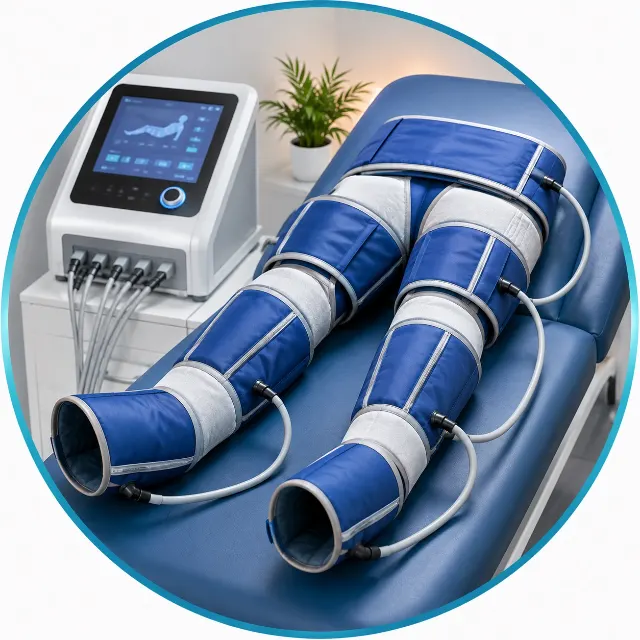
During treatment you lie down and rest. The device monitors your heart rhythm with an ECG and controls the cuffs accordingly.
Cuffs inflate
While the heart relaxes, the cuffs on the calves, thighs and buttocks inflate in sequence: first the calves, then the thighs and buttocks.
Blood flow increases
Cuff pressure pushes blood toward the heart and speeds up flow in the vessels. The patient expends no effort during this.
The heart's workload is reduced
The pressure is released just before the heart contracts, so the heart can pump more easily. This cycle repeats with every heartbeat.
Symptoms are monitored
Fatigue, shortness of breath and walking distance are measured before and after the course. Results are reviewed with you.
What Has Been Reported in Studies?
Response varies from person to person. The following are aims and gains reported in studies.
Fatigue
In the 231-patient study, the fatigue score decreased significantly after EECP.
Shortness of breath
The proportion with moderate-to-severe shortness of breath fell from 84.9 percent to 35.9 percent.
Walking distance
Six-minute walking distance increased by about 46 meters on average.
Brain fog
In a study of 80 patients, test scores of those with cognitive impairment improved after EECP.
Return to work
Of 23 patients unable to work because of their symptoms, 18 reported returning to work after EECP.
Safety
Across a total of 7,296 hours of treatment, EECP was delivered safely.
Who Is It Suitable For, and Who Not?
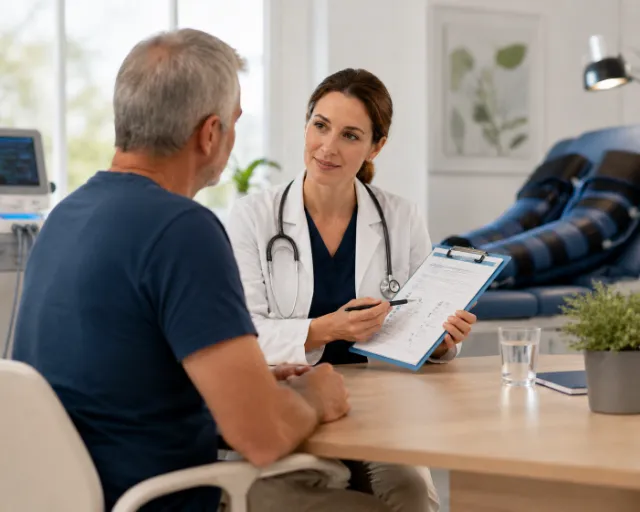
First, the long COVID diagnosis and other possible causes of the symptoms are investigated; the heart and lungs are evaluated. The decision on EECP is made individually by our cardiologist.
✓May be suitable
- Patients with fatigue and shortness of breath for at least three months after COVID
- Long COVID patients with chest pain whose heart has been evaluated
- Patients who find exercise difficult because exertion worsens their symptoms
- Patients struggling at work because of brain fog who are suitable from a cardiovascular standpoint
✕Not suitable
- Newly developed deep vein thrombosis or pulmonary embolism after COVID
- Severe aortic valve regurgitation
- Aortic aneurysm
- Active deep vein thrombosis, vein inflammation
- Uncontrolled high blood pressure
- Severe rhythm disorders
- Marked bleeding tendency and pregnancy
How Does the Treatment Process Work?
Blood pressure and pulse are checked before every session. At the end of the course, results are reviewed with our cardiologist. For patients with post-exertional worsening, rest time after the session is planned together.
Frequently Asked Questions About Post-COVID Syndrome and EECP
Does EECP treat long COVID?
There is no proven treatment for long COVID. In a 231-patient study, symptoms improved after EECP; however, without a control group it is unknown how much of the improvement is due to EECP.
I can't exercise. Is EECP suitable?
EECP is applied lying down, without exertion. Experts stress that excessive exertion can worsen symptoms. That is why rest after the session and your daily activity level are planned together.
Does it have an effect on brain fog?
In a study of 80 patients, test scores of those with cognitive impairment at baseline improved. This study also had no control group; we interpret the results with caution.
How long after COVID can it be started?
For a long COVID diagnosis, symptoms must last at least three months. Patients in the study had had COVID about nine months earlier on average. Timing is decided together according to your general condition.
Will I keep taking my medication?
Yes. You should continue your medication as recommended by your cardiologist. Any change to medication is decided only by your doctor.
How many sessions are needed?
The standard course is 35 sessions: 5 days a week, 60 minutes per session. In the study, patients received 32 sessions on average. You return to daily life immediately after a session.
You May Also Be Interested In
Contact us for a free preliminary assessment
If your post-COVID complaints persist, contact us. Our cardiologist will assess your heart and vessels and tell you openly whether EECP is suitable for you. Bringing earlier test results and reports makes the evaluation easier.
- Non-surgical
- Painless
- Under medical supervision
- Nicosia, Cyprus